To reduce the risk of slip-related incidents in public and commercial settings, Australia has established specific building codes and safety standards, including AS4586:2013. This standard defines slip-resistance classifications and testing methods for various floor surfaces and environments, helping ensure safe, secure footing for pedestrians in both dry and wet conditions.
As Australia’s leading name for stair and floor safety products, we’ll break down slip ratings and explain what they mean for safer, more compliant public and commercial spaces.
What Are Slip Ratings?
Slip ratings indicate how slippery a floor surface is, helping assess the risk of slips and falls under typical pedestrian conditions.
In Australia, AS4586:2013 classifies pedestrian surfaces into five categories, P1 through to P5, based on their slip-resistance performance, with P1 representing a very high slip risk and P5 indicating a very low risk.
Materials used for commercial stair nosings, tactile indicators, and entrance matting must undergo formal slip-resistance testing to ensure they are correctly classified under Australian Standards. This process helps designers and builders make informed product selections and, where required, provide certification and documentation of slip-resistance test results to demonstrate compliance.
Why Slip Ratings Matter for Safety & Compliance
According to Safe Work Australia, falls, trips, and slips accounted for 21.8% of serious workers’ compensation claims between 2023 and 2024, second only to body-stressing injuries.
Falls were also the leading cause of injury hospitalisations in 2023-24, continuing a steady rise over the past decade.
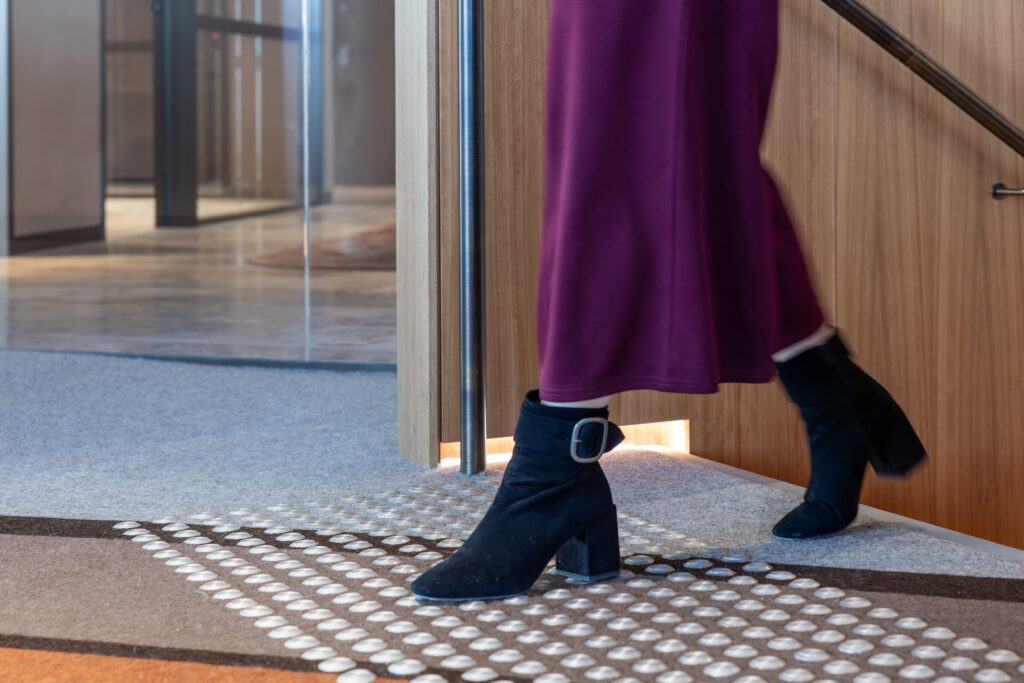
While many hospitalised fall injuries occur in residential settings, designers, builders, and facility managers must still do their due diligence to meet Australian stair and flooring safety standards. This is especially critical in public and commercial buildings, where high foot traffic and users of varying mobility levels increase risk.
Whether due to inaccurate testing or negligence, failing to meet AS4586 slip rating criteria can result in preventable falls and injuries, non-compliance, and costly legal consequences.
What is the Slip Rating for Australian Standards?
Australia uses three different slip rating systems, selected based on surface type and expected conditions.
These include the Pendulum Test (P ratings) for pedestrian areas, the Oil-Wet Ramp Test (R ratings) for industrial settings, and the Wet-Barefoot Ramp Test (A–C ratings) for barefoot zones.
Each test helps determine what a good slip rating is for each application.
Pendulum Ratings (P0–P5)
Slip resistance values are determined through pendulum testing, which measures the dynamic coefficient of friction (DCOF) of pedestrian surfaces under specified conditions.
The Pendulum Test Value (PTV) indicates the level of slip resistance exhibited by a surface, ranging from P0 to P5 according to AS 4586.
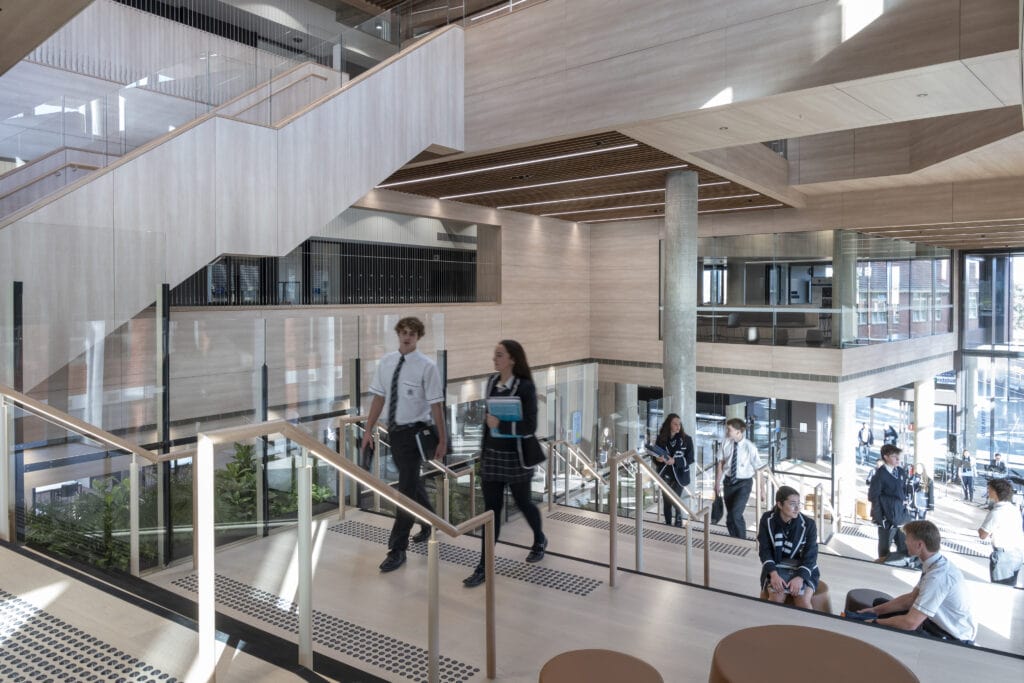
The higher the P rating, the greater the surface’s ability to provide grip in wet conditions. A P5 slip rating represents the highest level of wet slip resistance, offering the lowest risk of slipping.
| Pendulum Rating | Slip Risk | Ideal Application |
| P0 | Very high (very slippery) | Not suitable for pedestrian surfaces or for areas where slip risk is a concern. |
| P1 | Very high | For very low-risk, dry-only areas (if at all); not safe for wet or public floors. |
| P2 | High slip risk | For limited use in dry indoor spaces with minimal foot traffic. |
| P3 | Moderate slip risk | Suitable for everyday indoor use, including internal stairs, landings, and floors. |
| P4 | Low slip risk | Suitable for exterior areas, entrances, ramps, wet-prone zones, or higher-traffic public areas. |
| P5 | Very low slip risk (excellent grip when wet) | Ideal for outdoor surfaces, wet areas, ramps, and high-safety zones. |
Oil–Wet Ramp Ratings (R9–R13)
R ratings are designed to measure slip resistance for surfaces that are likely to become oily, greasy, or exposed to industrial contaminants.
They are commonly used in commercial, industrial, and high-risk wet environments, where standard slip tests may not accurately reflect real-world conditions.
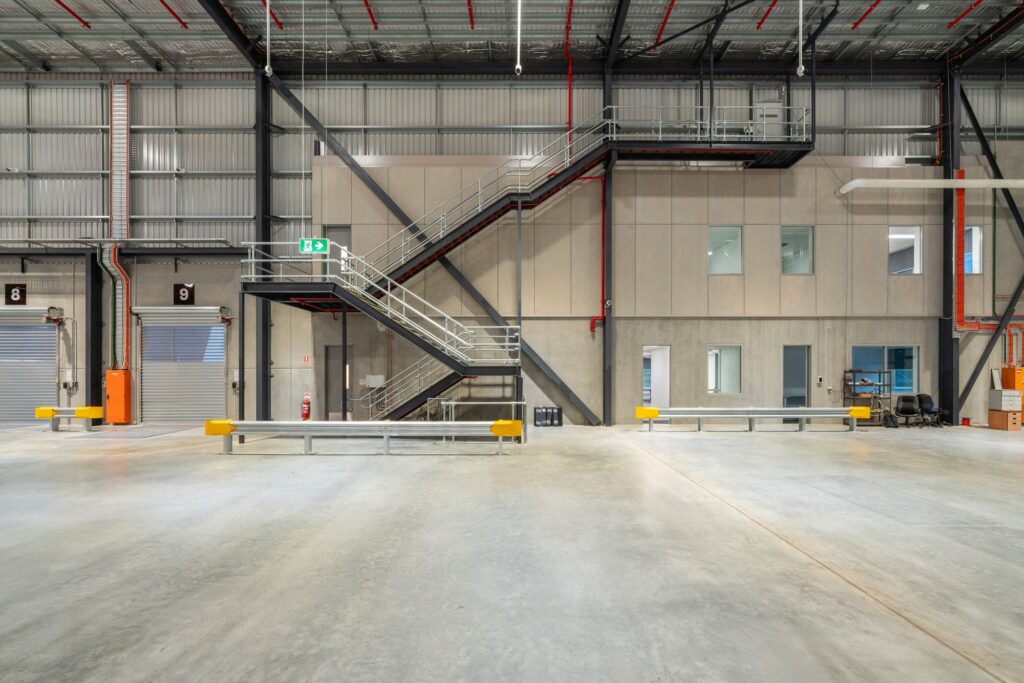
Unlike Pendulum (P) ratings, which focus on general wet slip resistance for pedestrian surfaces, R ratings specifically indicate how well a surface performs under oily or wet conditions.
The higher the R rating, the greater the grip and safety for users in slippery environments.
| Ramp Rating | Slip Risk | Ideal Application |
| R9 | High – lowest level of grip | Dry indoor areas: living rooms, bedrooms, and hallways with little chance of water or spills. |
| R10 | Moderate – some slip resistance | Indoor areas with occasional moisture or minor spills: kitchens, cloakrooms, laundry rooms. |
| R11 | Better – moderate to good grip | Bathrooms, utility rooms, covered patios and locations that may get wet sometimes. |
| R12 | High – strong grip | Wet or semi-wet areas, such as commercial kitchens, outdoor patios, pool surrounds, and heavier-use zones. |
| R13 | Very high – maximum grip | High-safety or high-risk wet environments: swimming-pool decks, public showers, industrial or commercial kitchens, outdoor steps and slippery zones. |
Barefoot Ramp Ratings (A, B, C)
Barefoot ramp ratings assess slip resistance in areas where people often walk barefoot, such as pools, showers, and other wet leisure spaces. These ratings ensure surfaces provide enough grip to prevent slips while remaining comfortable for barefoot users.
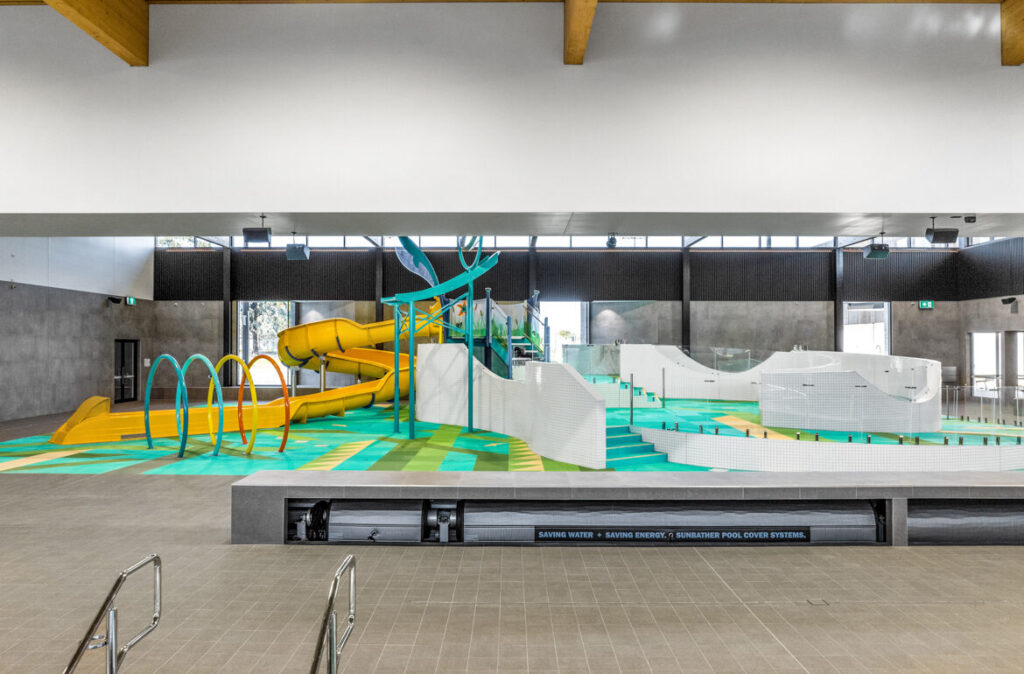
A-rated surfaces offer the lowest barefoot grip and are only suitable for light-use wet areas, while B-rated surfaces offer moderate slip resistance for indoor wet areas.
On the other hand, C-rated surfaces provide the strongest barefoot grip, ideal for pool areas, outdoor showers, and other high-safety wet zones.
| Barefoot Ramp Rating | Slip Risk | Ideal Application |
| A | High slip risk – lowest barefoot slip resistance. | Light-use wet areas, such as low-risk shower zones and areas unlikely to stay wet for long. |
| B | Moderate slip risk – better than A, but still modest grip. | Suitable for indoor wet areas such as bathrooms, communal change rooms, and spa-room floors. |
| C | Low slip risk – strongest barefoot grip under wet conditions. | Pool surrounds, outdoor showers, wet leisure areas, and high-safety wet zones. |
Where are Slip Ratings Required?
Slip-rated surfaces and products are mandatory in many commercial and public areas to protect people from slips and falls while ensuring compliance with Australian Standards. High-traffic zones such as building entrances, stairs, ramps, and outdoor pathways should all be assessed to determine slip risk.
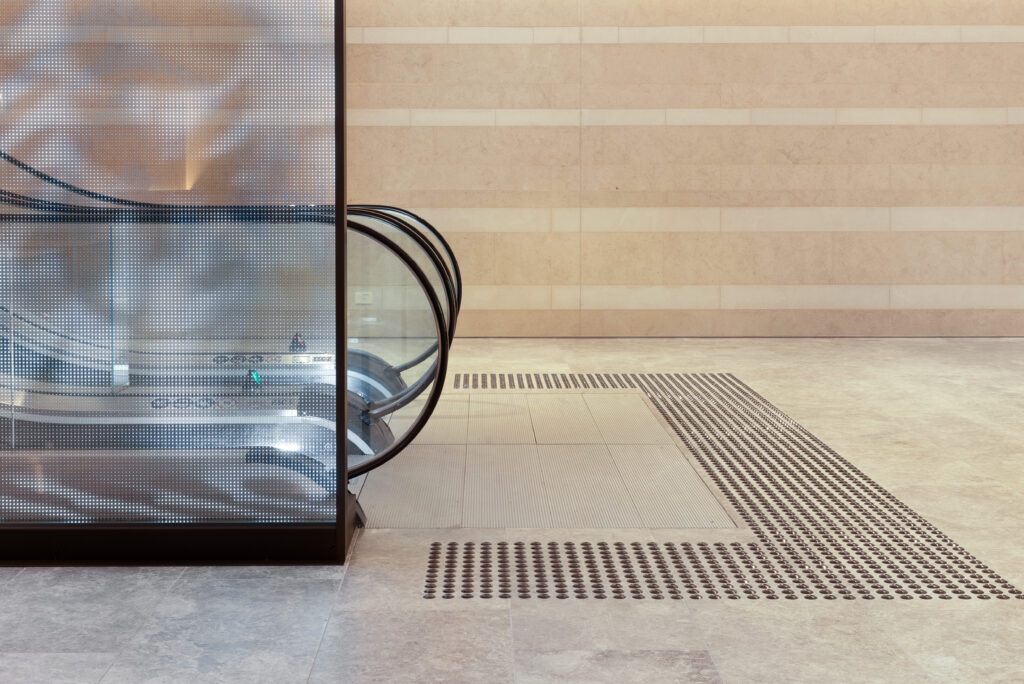
When planning or refurbishing a commercial space, building professionals need to consider what slip rating is required for each area. Entrances and ramps may require higher slip resistance for wet conditions, such as a P4 or P5 rating, while a P3 rating may suffice for indoor corridors and stair landings.
By specifying the correct slip resistance for common commercial areas, designers, architects, and facility managers can ensure safety, accessibility, and peace of mind while meeting compliance requirements.
Classic Architectural Group’s Slip-Rated Product Solutions
Classic Architectural Group offers compliant slip-rated entrance matting, tactile indicators, and stair nosings designed to meet Australian standards.
Every product comes with individual slip reports to support the creation of safe, functional, and durable public and commercial spaces.
Entrance Matting (Slip-Rated up to P5)
By trapping dirt, grit, and moisture at the door, entrance matting is often the first and most effective slip-prevention measure for commercial and public buildings.
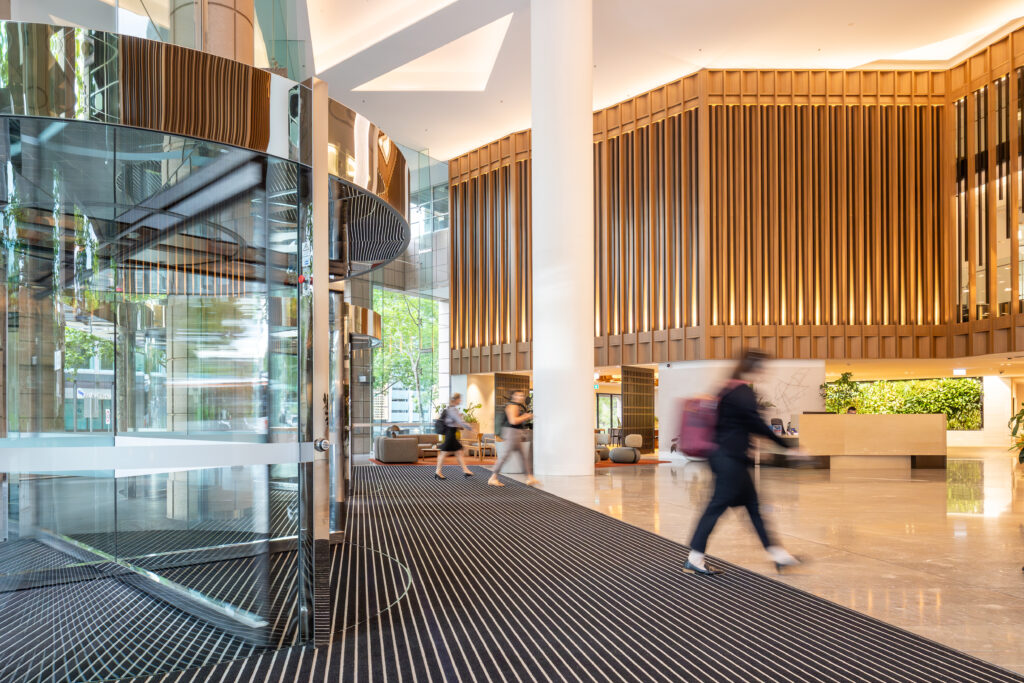
Installed at key entry points, they help reduce slip risk while maintaining cleanliness and protecting interior floor finishes from premature wear.
Alongside custom solutions, Classic offers a range of high-quality commercial entrance matting with P5 slip ratings for both interior and exterior applications, supporting safer access without compromising design.
| Product | Slip Rating | Features |
| Integra Vantt | P5 – very low slip risk | › Interior use for medium to high traffic applications › Flexible interlocking system for customisation › Global GreenTagCertTM GreenRate™ Level A Certified |
| Integra Verse | P5 – very low slip risk | › Interior and exterior use › Fully reversible, double-sided entrance matting system › Designed for high-traffic commercial and public settings |
| Integra Link | P5 – very low slip risk | › Interior and exterior use › Features modular tiles with an easy interlocking system › Easy to clean and hard-wearing for high-traffic situations |
| Integra Zone | P5 – very low slip risk | › Interior use for high traffic applications › Special texturing and a thick, non-static cut-pile design › Global GreenTagCertTM GreenRate™ Level A Certified |
Explore our complete range of slip-resistant commercial entrance matting.
Tactile Indicators
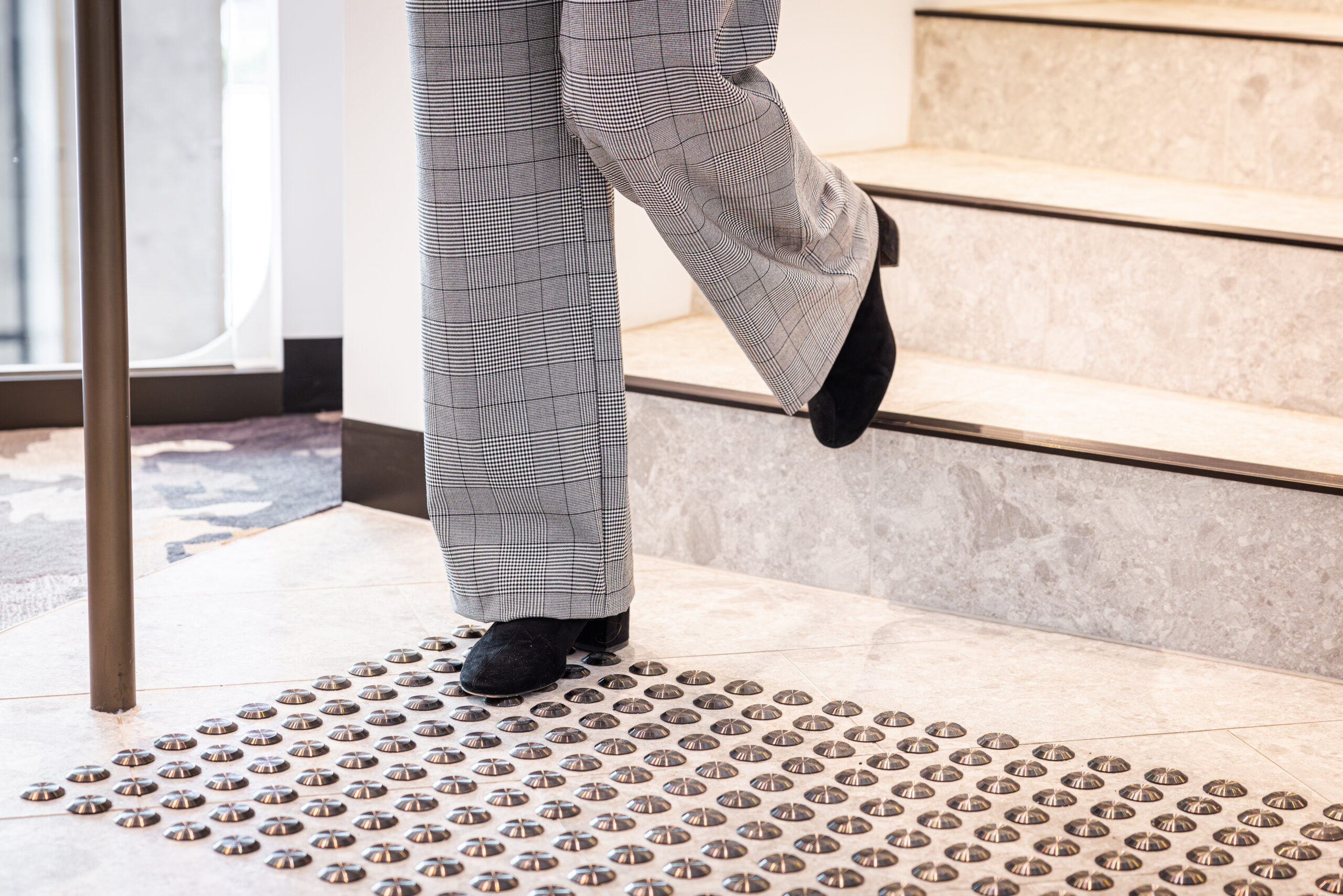
Tactile indicators provide directional guidance and alert people with visual impairments to impending hazards, empowering them to navigate public access areas safely and confidently.
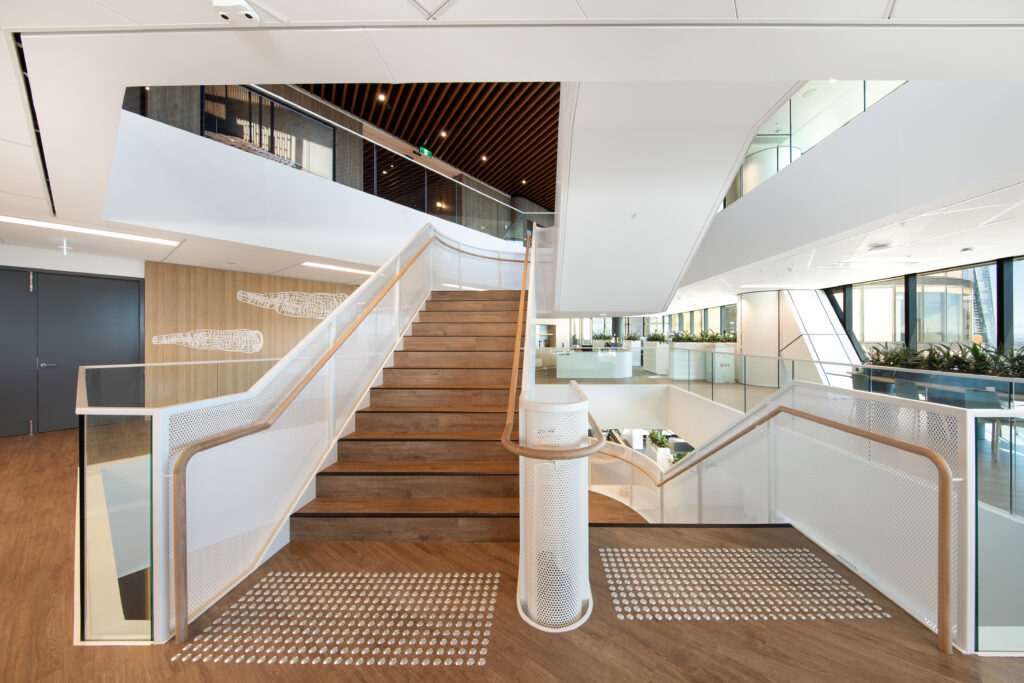
Commonly installed at the top or bottom of staircases, ramps, or autowalks, they also help minimise the risk of slips and falls by offering essential tactile cues underfoot.
| Product | Slip Rating | Features |
| Tredfx SH10N | P5 – very low slip risk | › Interior and exterior applications › Grooved 10-ring stainless steel top › Ideal for retrofitting › Self-adhesive options |
| Tredfx PH06P | P5 – very low slip risk | › Interior and exterior use › Polyurethane grooved 6-ring top › Available in a large range of colours |
| Tredfx BH60P | P5 – very low slip risk | › Interior and exterior applications › Made from solid brass with a grit insert › Ideal for retrofitting › Self-adhesive options |
| Tredfx PT30A | P5 – very low slip risk | › Interior and exterior use › Polyurethane 300 x 300 warning tile › Non-slip top with self-adhesive backing › Available in a large range of colours |
Available in a wide range of materials and colours to suit different environments, Classic’s tactile systems are designed with slip resistance and compliance at the forefront. Explore our range of slip-resistant tactiles and request a quick quote today.
Stair Nosings
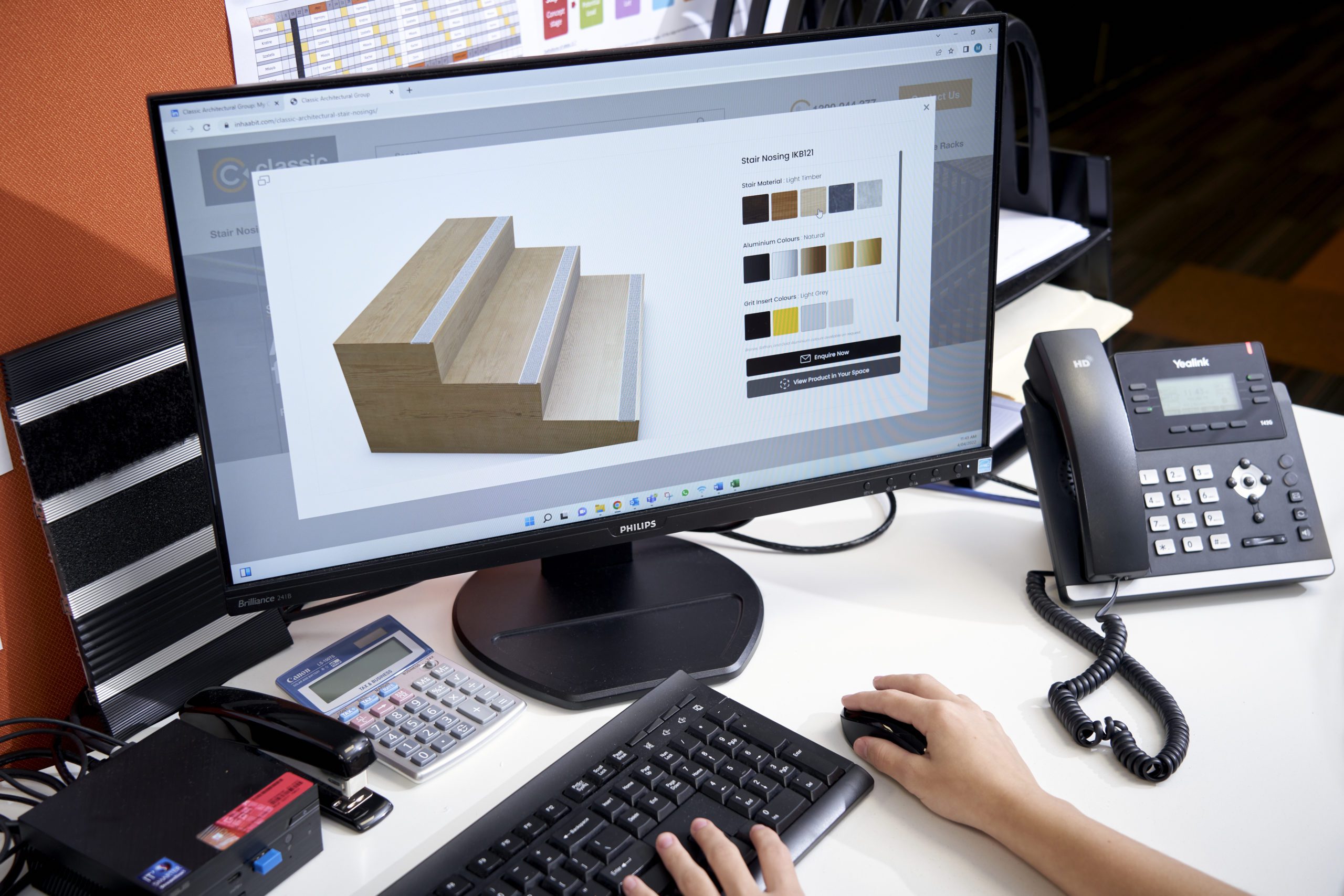
Stair nosings provide a sturdy, anti-slip surface along the edge of each step, making them essential for stair safety and reducing the risk of slip-and-fall injuries.
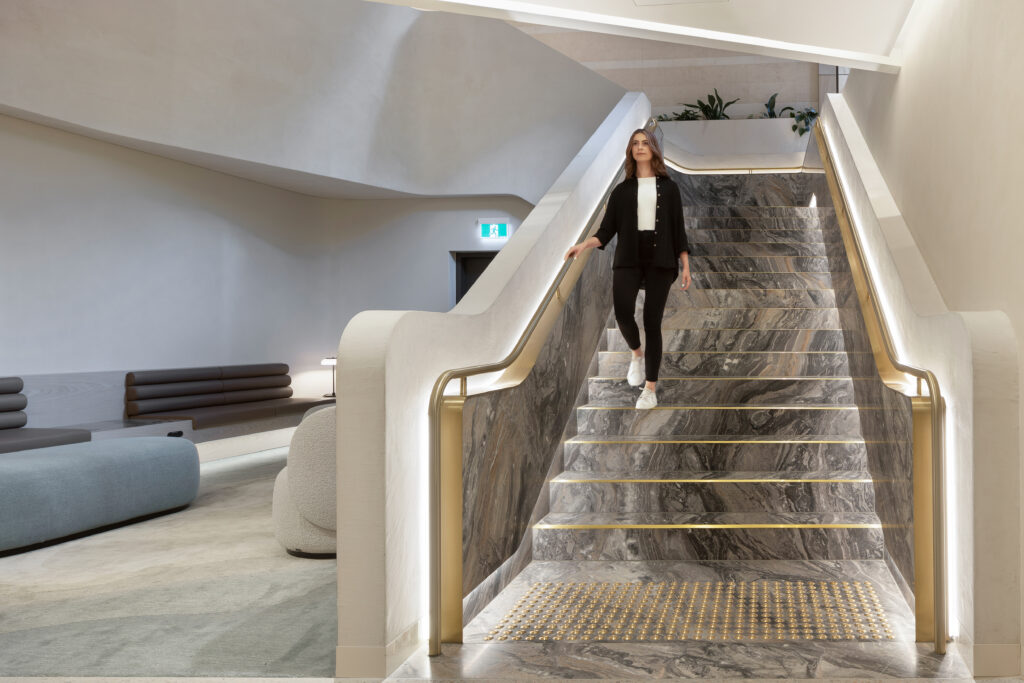
Installed on the nose of each step, they also protect the steps from ongoing wear and tear, helping to extend the lifespan of staircases in high-traffic areas.
Classic offers architecturally designed stair nosings with slip-resistant inserts, including P5 slip-rated options to ensure compliance with Australian Standards.
| Product | Slip Rating | Features |
| Tredfx DKR104 | P5 – very low slip risk | › Interior and exterior use › Hard-wearing aluminium stair nosing with grit insert › Suitable for surface mount applications |
| Tredfx PKD106 | P5 – very low slip risk | › For interior use only › Hard-wearing aluminium stair nosing with grit insert › Carpet or rubber applications |
| Tredfx IKB140-H | P5 – very low slip risk | › Interior and exterior use › Timeless solid brass stair nosing with grit insert › Suitable for rebated timber or tile applications |
| Tredfx GKR030 | P5 – very low slip risk | › Exterior use › Extremely tough fibreglass stair nosing › Ideal for industrial settings › Suitable for surface mount applications |
Classic’s Tredfx slip-resistant stair nosings are designed for use across a wide range of substrates and environments, enhancing access stairs and ramps by improving grip and visibility while maintaining a refined, architectural finish.
How to Choose the Right Slip Rating
To ensure compliance and reduce liability risk, architects, builders, and property managers need to select the appropriate slip rating for each area.
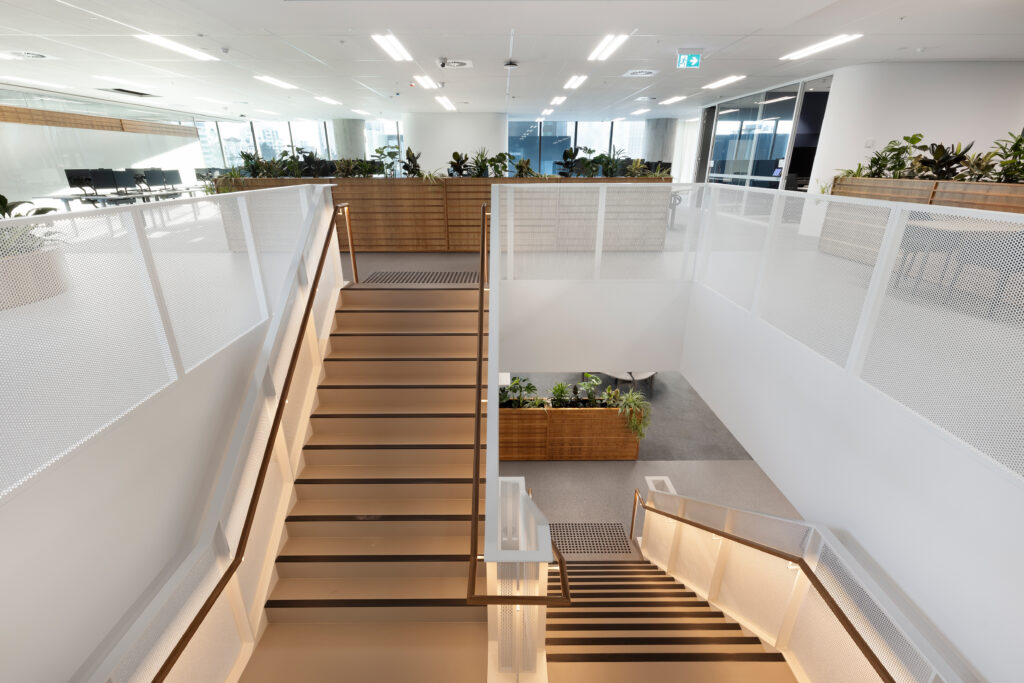
Factors such as location, traffic volume, and exposure to various environmental conditions can result in different slip-resistant flooring requirements. What works in a dry office corridor may not be suitable for an external staircase in an industrial site.
While it’s always best to consult experienced floor and stair safety specialists, these steps can help guide your decision-making:
- Identify the site type and specific installation area, such as entrances, stairs, ramps, or fire exits
- Determine the typical conditions and environmental exposure, including wet, dry, or oily surfaces
- Match the area and conditions to the appropriate slip rating criteria: pendulum rating, oil-wet ramp ratings, or barefoot ramp ratings
- Select the correct slip-rated product or request a custom solution where required
- Review the slip test reports to confirm suitability and compliance
- Ensure correct installation in line with manufacturer guidelines
Proper cleaning, maintenance, and periodic testing are recommended to help preserve slip resistance over time.
For tailored advice or custom solutions, Classic can support your project from specification through to installation.
Why Work With Classic Architectural Group
Classic Architectural Group is the trusted name for high-quality, slip-rated stair and floor safety products across Australia.
Our range of P-rated solutions is fully compliant with Australian Standards, supported by detailed slip-test reports for performance assurance and peace of mind.
Beyond supply, we provide expert consultation, custom design, installation, on-site testing, and ongoing maintenance services to help you create compliant, safe, and accessible spaces with confidence.
Contact us to get a step ahead today.