With bike riding continuing to grow as an active transport choice across Australia, the demand for well-designed bike storage and end-of-trip facilities is increasing.
According to the latest CWANZ National Walking and Cycling Participation Survey, cycling participation increased by more than 10% nationwide in 2025, with 38% of respondents also stating they would ride more often if secure bike parking or storage were available at their destination.
As a result, architects, developers, councils, and facility managers must focus on incorporating safe, compliant bike storage during the planning phase. Whether located indoors, outdoors, or a combination of both, careful consideration of the overall construction budget, available space, and ongoing maintenance is required. If bike parking is left too late in the design process, it can result in limited product selection, inefficient layouts, security issues, and costly refits.
Building on over 45 years of experience, Classic Architectural Group supplies architectural bike parking systems designed for Australian conditions and compliance requirements. Our stocked and custom bike racks help architects and building professionals create practical, compliant storage facilities for projects of every scale.
| Indoor or Outdoor Bike Racks: Which One is Better? Indoor bike storage is the better option when security, weather protection, and long-term amenity are priorities. They are typically suited to apartment buildings, commercial offices, and secure campuses. Outdoor bike storage suits high-traffic, short-stay settings such as transport hubs, retail precincts, community facilities, and schools, where accessibility and convenience matter most. For most large developments, a hybrid approach combining both indoor and outdoor bike storage options works best. |
What Is Indoor Bike Storage?
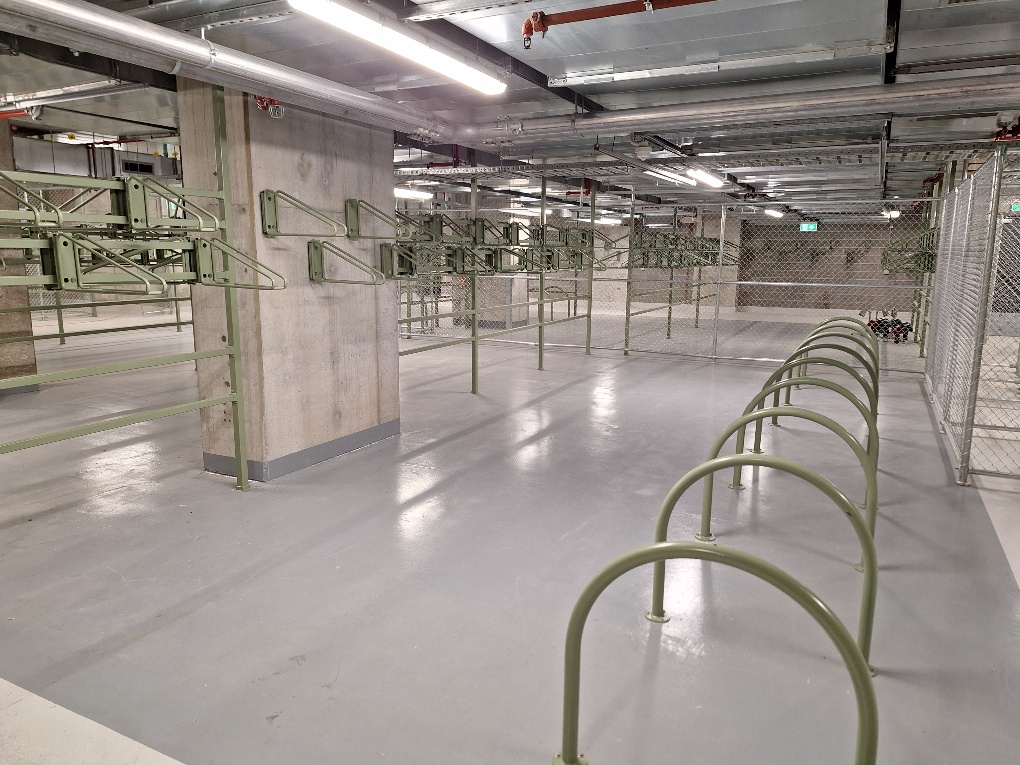
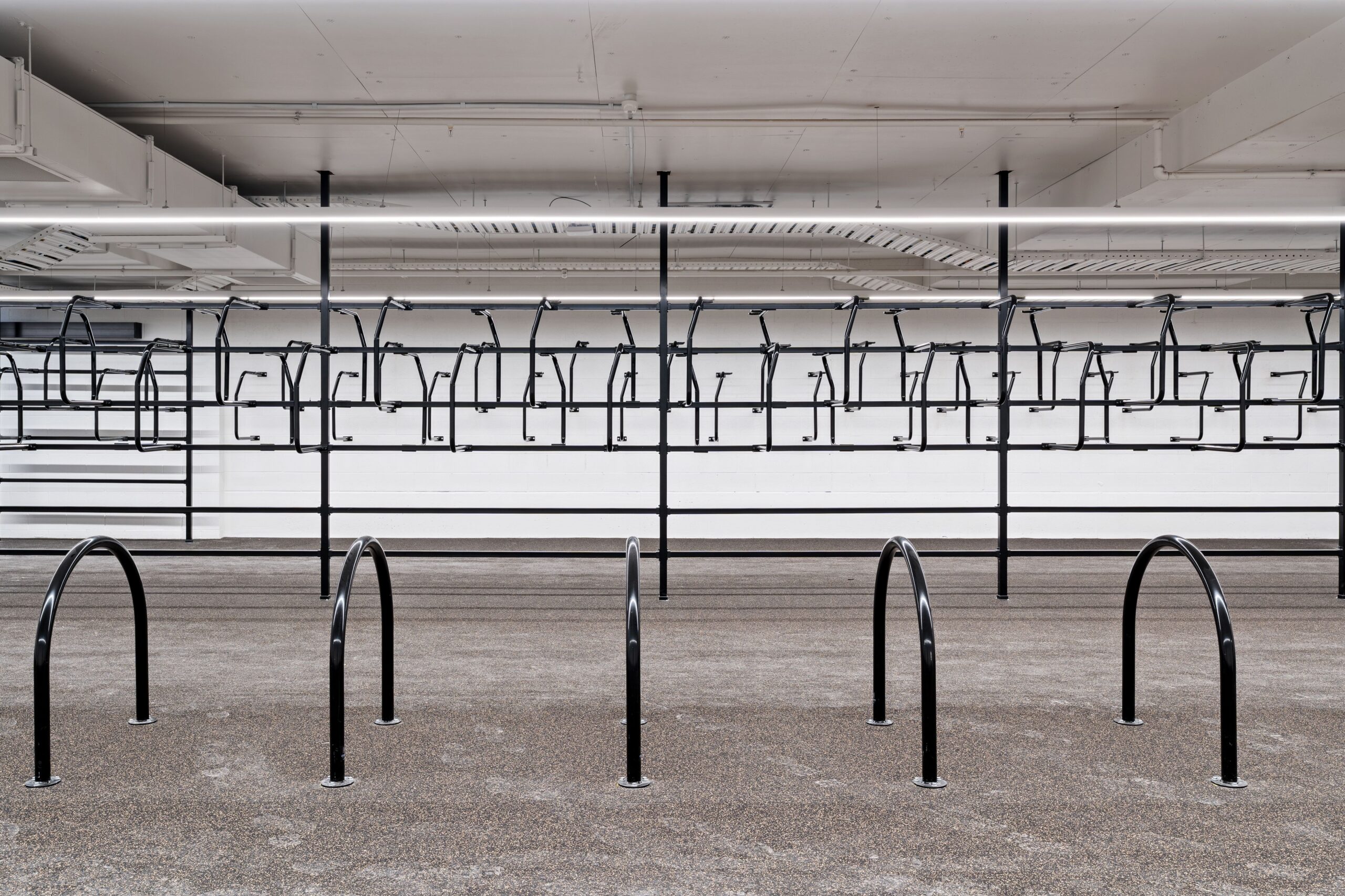
Indoor bike storage refers to dedicated bicycle parking facilities located within a building or enclosed space, protected from weather and external environmental conditions. These facilities are often provided as secure bike rooms or designated bike parking zones within basements and other access-controlled areas.
Common applications include:
- Apartment and mixed-use developments
- Commercial office buildings
- Schools and universities
- Multi-storey car parks
Popular indoor bike storage solutions:
- Wall-mounted bike racks
- Dynamic bike racks
- Two-tier vertical systems
Because indoor storage often occupies valuable building area, efficient space planning is essential. Architects and building professionals must maximise storage capacity while maintaining safe, convenient user access and compliance with applicable building requirements.
Other important design considerations include security and access control, fire safety and egress compliance, optimal lighting, and proximity to building entrances and end-of-trip amenities.
What Is Outdoor Bike Storage?
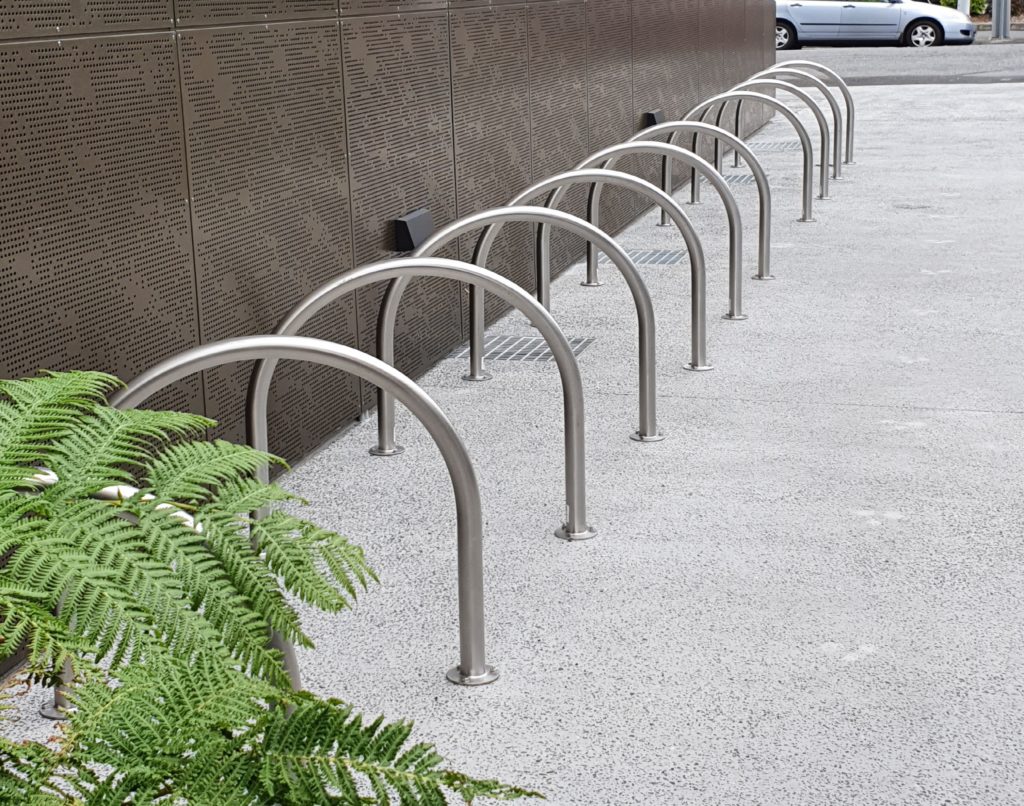
Outdoor bike storage refers to bicycle parking facilities installed in open-air or partially sheltered environments. Depending on the application, this may include on-street bike parking, covered bike shelters, modular bike compounds with perimeter fencing, or designated outdoor bike parking areas within public and commercial developments.
Common applications include:
- Streetscapes and town centres
- Public transport hubs
- Retail and mixed-use precincts
- School drop-off zones
- Parks, universities, and public campuses
Popular outdoor bike storage solutions:
- Standalone bike hoops and racks
- Surface-mounted bike racks
- Secure modular bike compounds
Since outdoor bike storage is typically located in shared public spaces, the design must balance functionality, durability, and visual appeal. It should complement the surrounding streetscape while providing convenient, accessible parking for a wide range of users and bike types.
Exposed to both the weather and the risk of theft or vandalism, architects and building professionals should consider material durability, corrosion resistance, passive surveillance, lighting, accessibility clearances, and maintenance expectations.
Indoor Bike Storage: Pros and Cons
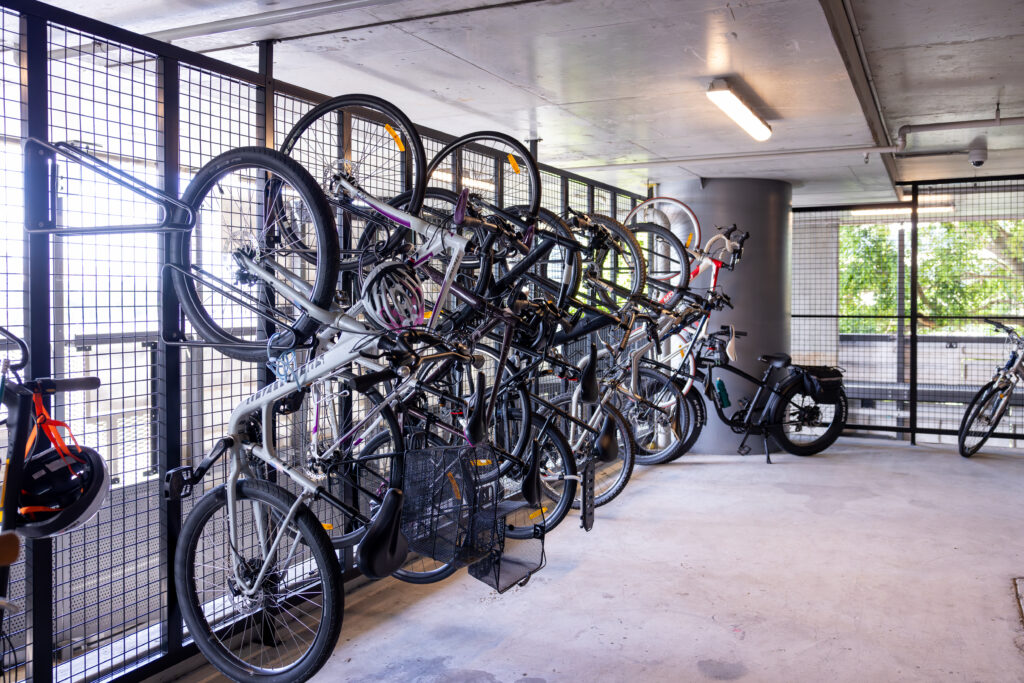
Indoor bike storage offers the highest level of protection and security, making it a popular choice for residential and commercial developments. However, due to potential space limitations, it also requires greater planning and coordination during the design phase.
Pros
- Enhanced security: Access-controlled rooms and enclosed environments significantly reduce the risk of theft and vandalism.
- Full-weather protection: Indoor facilities protect against UV damage, rain, dust, and corrosion, extending the cleanliness and lifespan of both bicycles and storage equipment.
- Premium amenity: Secure indoor bike storage is often a highly valued feature in apartment buildings and commercial offices, supporting tenant satisfaction while boosting leasing opportunities and retention rates.
- Space-efficient designs: Vertical and two-tier bike storage systems can help maximise storage capacity, making them ideal where floor space is limited.
- Seamless integration with end-of-trip facilities: Indoor bike storage can be conveniently located alongside changerooms, lockers, showers, and repair stations for a complete end-of-trip solution.
Cons
- Occupies valuable internal floor space: Dedicated indoor bike storage facilities reduce the area available for other building functions, which can be particularly costly in high-density residential and commercial developments.
- Higher upfront cost: Indoor facilities typically require more coordination during planning, design, and construction, including structural integration, lighting, ventilation, access control, and utility management.
- Retrofit challenges: Incorporating secure bike storage infrastructure into an existing building can require significant alterations to layouts, services, and access arrangements, making refurbishment projects more complex.
When to Choose Indoor Bike Storage
Indoor bike storage is best suited to projects where security, weather protection, user convenience, and long-term amenity value are key priorities. It is particularly beneficial for developments where users are likely to store their bikes regularly or for extended periods.
Indoor bike storage is commonly specified for:
- Residential apartment buildings where residents need secure overnight storage for their bikes.
- Commercial offices supporting sustainability and active transport initiatives by providing convenient end-of-trip facilities for employees.
- Secure campuses requiring controlled access and stricter security measures, such as hospitals, universities, and government buildings.
- High-density urban sites where outdoor space is limited, and bicycles may be at greater risk of theft or damage.
- Premium developments where long-term tenant retention and provision of well-designed end-of-trip amenities are priorities.
Featured Project: Flinders West
Located within Melbourne’s Northbank precinct, Flinders West is a $190 million mixed-use development featuring commercial office, retail, and hospitality spaces.
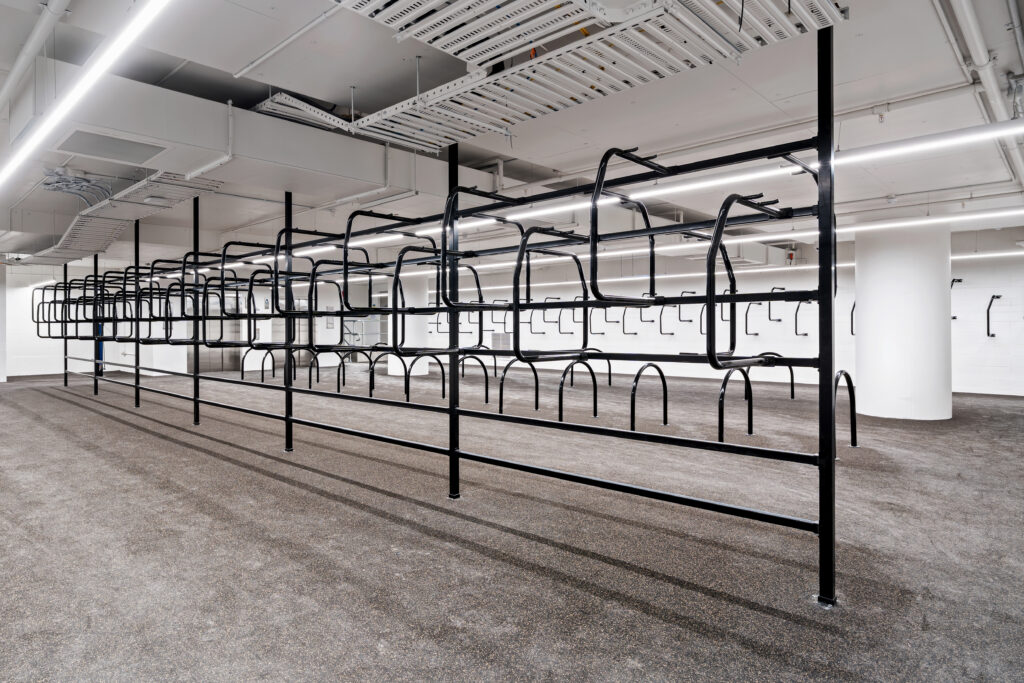
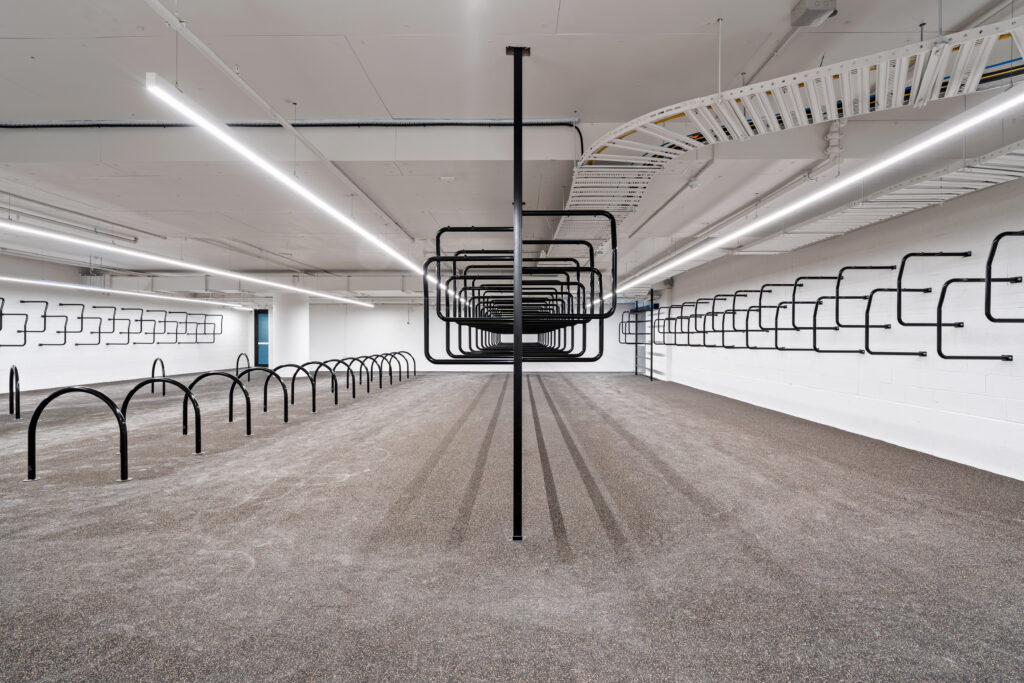
Project: Flinders West
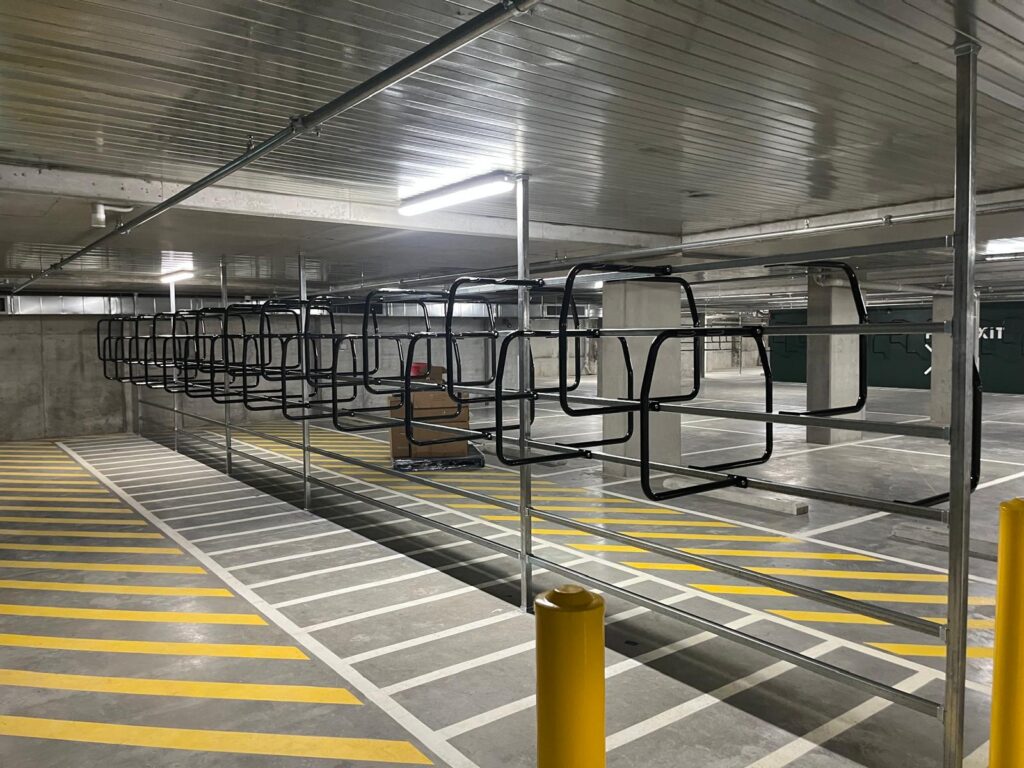
As part of a broader safety and access strategy, Classic Architectural Group partnered with Mirvac to create and fit out an indoor bike storage layout that optimised both functionality and capacity.
By supplying and installing the EziHold Frame bike rack system, we helped maximise the available space while providing a compliant, efficient storage solution that enhanced both user experience and accessibility.
Outdoor Bike Storage: Pros and Cons
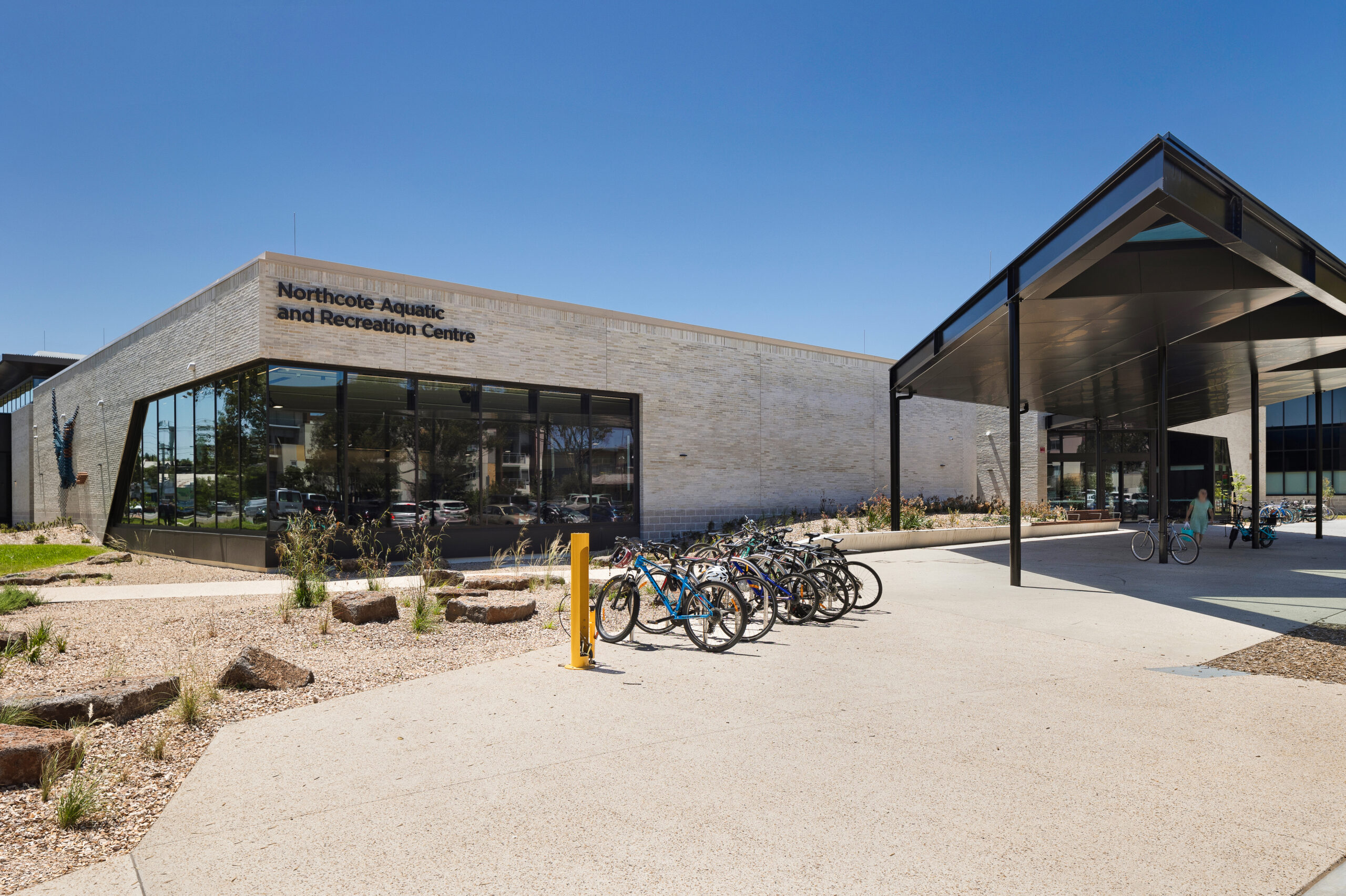
Outdoor bike storage offers a flexible and accessible solution for developments that require convenience, visibility, and more short-term parking options. While it is often easier to install and expand than indoor facilities, weather protection and long-term durability must be considered.
Pros
- Simple & cost-effective installation: Many outdoor bike racks and hoops require minimal groundwork and can be installed with fewer site modifications.
- Convenient & easily accessible: Users can quickly access or store their bikes without needing to navigate past doors, lifts, stairwells, or use access cards.
- Flexible & scalable solution for high-traffic environments: Modular systems can be easily expanded as demand increases.
- Preserves internal floor space: By moving bicycle parking outdoors, valuable building area can be allocated to other uses.
- Integration with landscape and public-realm design: Well-planned outdoor bike storage can complement the surrounding architecture and streetscapes.
Cons
- Increased risk of theft and vandalism: Outdoor storage, particularly overnight and in unsupervised locations, often presents a greater security risk.
- Weather exposure: Without appropriate shelter, bicycles may be exposed to rain, moisture, UV damage, and temperature fluctuations, which can shorten their lifespan and reduce user comfort.
- Lower perceived security: Users with premium, high-value bikes may prefer more secure, enclosed storage options, particularly for longer parking durations.
- Ongoing maintenance requirements: Outdoor installations require regular inspections and upkeep to address issues such as corrosion, damage, vandalism, and environmental wear.
When to Choose Outdoor Bike Storage
Outdoor bike storage is best suited to locations where convenience, accessibility, and high user turnover are priorities. It provides a practical solution for public spaces where users need quick access to bicycle parking without the complexity of navigating enclosed facilities.
Outdoor bike storage is commonly specified for:
- Public transport hubs to accommodate high-turnover and fast-access requirements throughout the day.
- Schools and universities where a large influx of students, staff, and visitors is expected to arrive or depart simultaneously.
- Retail precincts and town centres where most users will only require short-term bicycle parking.
- Parks, recreational facilities, and streetscapes that require versatile, convenient parking solutions in place of permanent enclosed bike storage infrastructure.
- Projects with limited budgets or site constraints that require more affordable, flexible bike parking options.
Featured Project: Botanical Village Mickleham
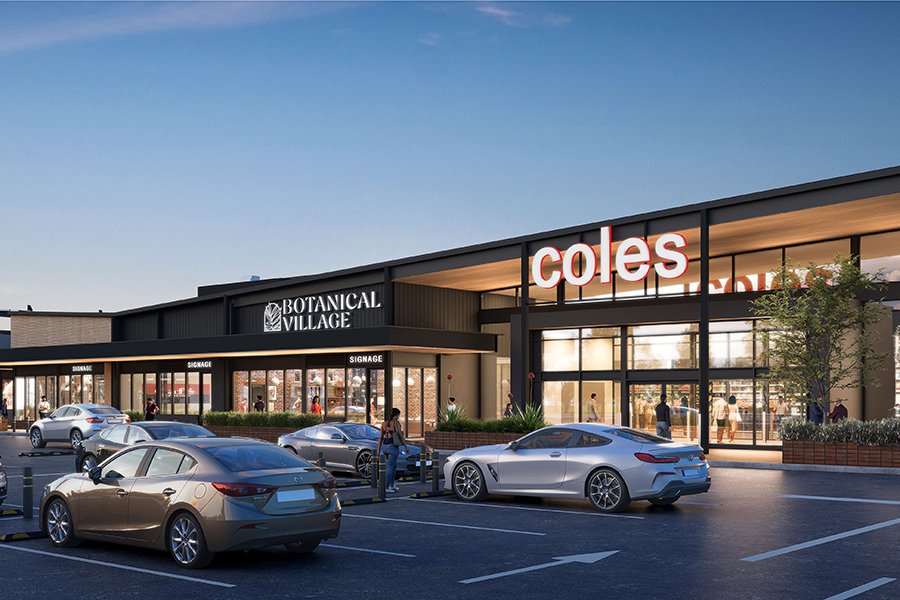
Located in one of Victoria’s fastest-growing corridors, Botanical Village Mickleham is a vibrant retail and community precinct featuring 26 specialty retailers alongside a co-located early education and kindergarten centre.
Project: Botanical Village Mickleham
Spanning 6,000 sqm over two levels, the centre has been designed to support everyday convenience while providing a welcoming destination for the thriving local community.
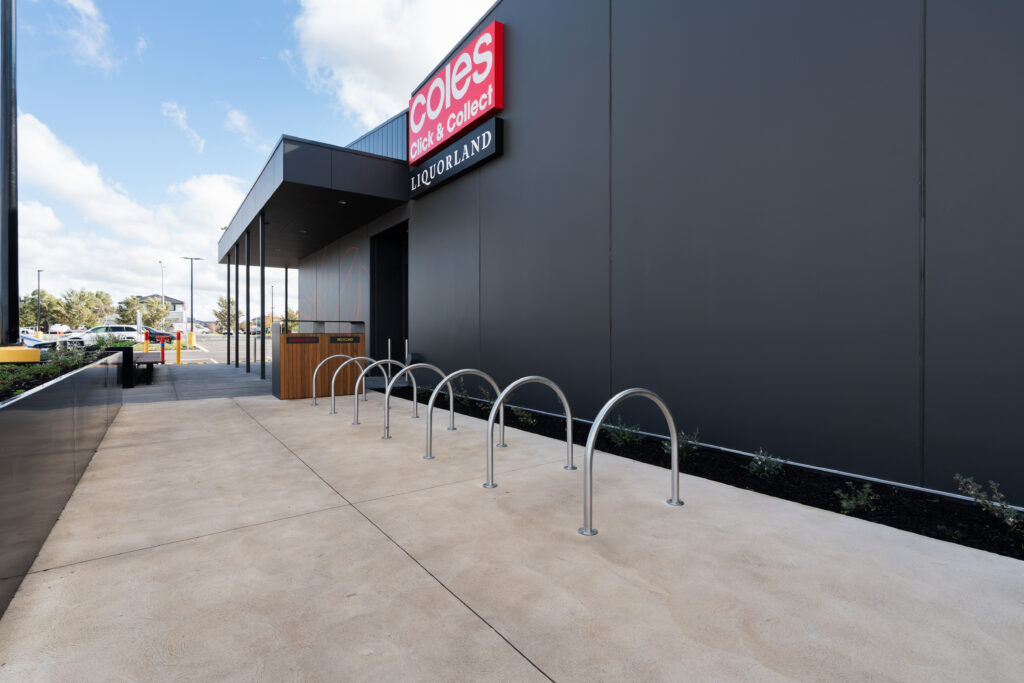
Working alongside the Oreana team, Classic Architectural Group delivered a range of access and safety solutions across the site, including outdoor bike racks that provide a practical, accessible parking option for shoppers, staff, and visitors.
Hybrid Approach: Combining Indoor and Outdoor Bike Storage
For many large-scale developments, a combination of indoor and outdoor bike storage provides the most effective outcome. Indoor facilities are typically the preferred option for residents and employees who require secure bicycle storage, while outdoor racks prioritise convenient access for short-stay visitors.
A hybrid approach allows projects to cater for different users, trip purposes, and parking durations.
Common hybrid setups include:
- Apartment buildings: A secure indoor bike room for residents, complemented by outdoor bike hoops for visitors, deliveries, and short-term parking.
- Commercial offices: Indoor bike storage systems for employees, supported by accessible outdoor racks near building entrances for visitors, couriers, and other service providers.
- Public transport hubs: Open outdoor bike racks for commuters needing quick, short-stay access, combined with secure bike lockers or enclosed storage options for longer stays.
As cycling continues to play a more important role in sustainable transport planning, hybrid bike storage solutions are increasingly setting the standard for new Australian commercial and residential developments. By considering the needs of all users during the planning and design phase, councils, town planners, and property developers can create more functional, future-proofed bike parking facilities.
Read our Complete Guide to Bike Storage Solutions to learn more about choosing the right bike parking systems, important compliance considerations, and practical examples for a wide range of commercial applications.
Important Factors When Comparing Bike Racks
Security Comparison: Indoor vs Outdoor Systems
Security is one of the most important considerations when deciding between indoor and outdoor bike storage systems.
Indoor bike storage typically provides a higher level of protection through controlled access and enclosed environments. However, even facilities that appear physically secure may still be underutilised if cyclists do not feel safe or comfortable accessing them due to compromising factors such as poor lighting or being located in a hidden part of the building.
On the other hand, outdoor bike parking can still provide a secure user experience by leveraging passive surveillance. Installing outdoor bike racks in clear sightlines of building entrances, CCTV cameras, and pedestrian traffic can enhance perceived security and deter theft when positioned strategically in the surrounding environment.
| Feature | Indoor (Bike Room) | Outdoor (Open Rack) |
| Theft risk | Low | High |
| Vandalism risk | Low | High |
| Weather protection | Full | None |
| Access control | Yes | No |
| CCTV compatible | Yes | Yes |
| Suits overnight parking | Yes | No |
| Suits short-stay users | Moderate | Yes |
Ultimately, the most effective bike storage solution should balance physical security measures with an optimal user experience.
Space and Design Efficiency
Maximising the available space is often one of the biggest influences when selecting a bike parking system. Whether located indoors or outdoors, effective planning is essential to optimise storage capacity while maintaining safe access and a positive user experience. Learn more about common bike storage design mistakes.
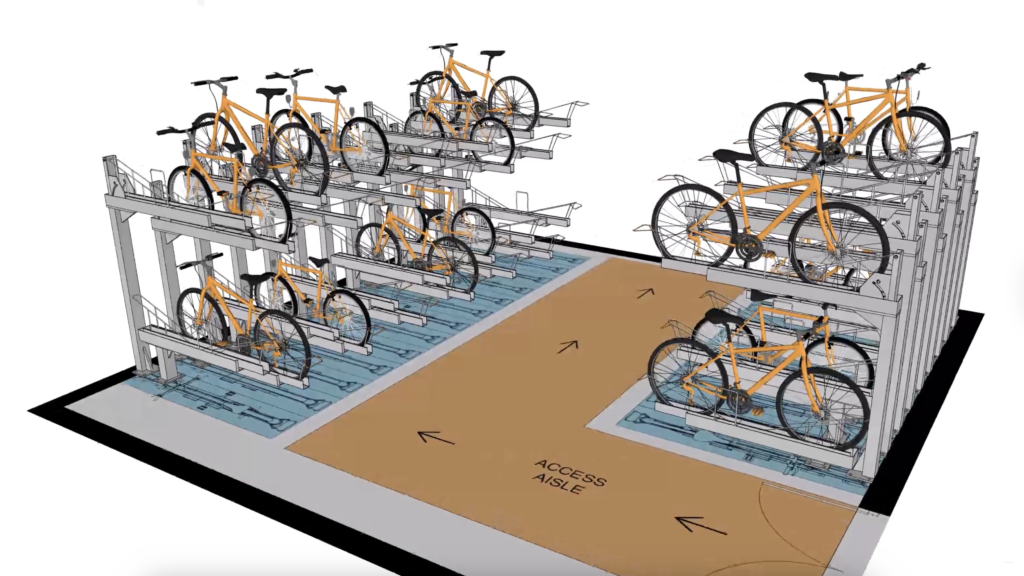
Indoor bike storage — key consideration factors:
- Two-tier rack systems can significantly increase bike storage capacity within the same footprint.
- Vertical wall-mounted racks can be an efficient option for narrow spaces, but may not be suitable for all cyclists, as they require users to lift their bikes into position.
- Maintain a minimum aisle width of 1500mm between facing racks to ensure safe, comfortable access and bike parking compliance (AS 2890.3).
- Plan around fixed building elements and potential obstacles such as doors, columns, electrical boards, and essential service access points.
- Create a seamless user experience by integrating active transport infrastructure with other end-of-trip facilities and prioritising convenient access routes.
Outdoor bike storage — key consideration factors:
- Allocate adequate spacing of 1000–1200mm between bike hoops and racks, and maintain clear access aisles of 2000–2500mm for safe, comfortable bicycle manoeuvring.
- Position bike storage strategically to avoid conflicts with pedestrian pathways, entrances, and other busy circulation zones, particularly in high-density areas.
- Incorporate shelter structures where possible to improve user experience, protect bicycles from weather exposure, and reduce maintenance costs.
- Select finishes and layouts that complement the surrounding architecture, landscaping, and streetscape design for visual cohesion.
Compliance, Safety, and Australian Standards
Whether bike storage is located indoors or outdoors, compliance and accessibility should be considered from the earliest stages of project planning. Thoughtful design helps create facilities that are safe, practical, and easy to use while supporting long-term performance and regulatory compliance.
AS 2890.3 — Bicycle Parking Facilities
AS 2890.3 specifies the requirements for the layout, design, and security of bike parking facilities.
For both indoor and outdoor bike storage, key considerations include:
- Spacing & layout: The standard outlines the ‘Bicycle Spacing Envelope’ and the required spacing between bikes for both horizontal and vertical bike parking to support safe parking and manoeuvring.
- Accessibility & usability: Bike storage areas should be conveniently located and easily accessible, meet required access aisle widths, and be clearly identified with appropriate signage. Accommodating various bicycle types, the standard also recommends that at least 20% of bike parking spaces be horizontal and ground-level to serve users who are unable to lift a bicycle.
- Safety & security provisions: AS 2890.3 sets out guidelines for the materials used to construct bike racks, appropriate fixing and installation methods, wheel-locking options, and recommended security measures for bike parking areas.
For more information on AS 2890.3, read our guide on Bike Parking Compliance in Australia.
National Construction Code (NCC) 2022
The National Construction Code (NCC) is a uniform set of technical provisions for the design and construction of buildings and other structures throughout Australia. The Building Code of Australia (BCA) forms chapters 1 and 2 of the NCC. The Building Code of Australia (BCA) adopts AS2890.3:2015 and requires mandatory compliance with AS2890.3.
Disability Discrimination Act (DDA) 1992 and AS 1428
The Disability Discrimination Act 1992 (DDA) protects people with permanent and temporary disabilities from discrimination, including access to public buildings and facilities. Supporting this legislation, AS 1428.1:2021 Design for Access and Mobility establishes the minimum accessibility requirements for new building work and upgrades to existing facilities.
When planning indoor or outdoor bike storage, consider how the area will be accessed and used by people of all abilities. This includes:
- Providing clear, unobstructed paths of travel to and around bike storage areas.
- Avoid layouts that create barriers for people using mobility aids or adaptive bicycles.
- Ensure bike parking does not block or interfere with recommended paths of travel or building entrances.
- Considering lighting, visibility, and wayfinding to improve safety and ease of navigation.
By considering these requirements alongside broader project objectives, architects and building professionals can deliver bicycle parking facilities that are compliant and accessible for all users.
Choosing the Right Bike Storage for Your Project
There is no one-size-fits-all approach to bike storage. The right solution depends on the type of development, who will use the facilities, how long bicycles are likely to be parked, the required level of security, and the project’s available space and budget.
Indoor bike storage is generally ideal for developments where long-term security, weather protection, and end-of-trip amenities are priorities. Outdoor bike storage, on the other hand, offers a flexible and cost-effective alternative for high-turnover environments where convenient public access is essential.
For many medium and large developments, a hybrid approach delivers the greatest value. By combining secure indoor storage facilities for residents, staff, or long-term users with accessible outdoor bike parking for visitors and short-stay cyclists, you can accommodate a broader range of users with room to adapt to future demand.
When all factors are considered, the best bike storage strategy is one that meets the project’s unique needs while balancing site constraints and cost considerations. Prioritised early in the design process, an effectively integrated system can improve functionality, support compliance, and enhance the user experience, all while delivering long-term value.
Design Your Bike Storage with Confidence.
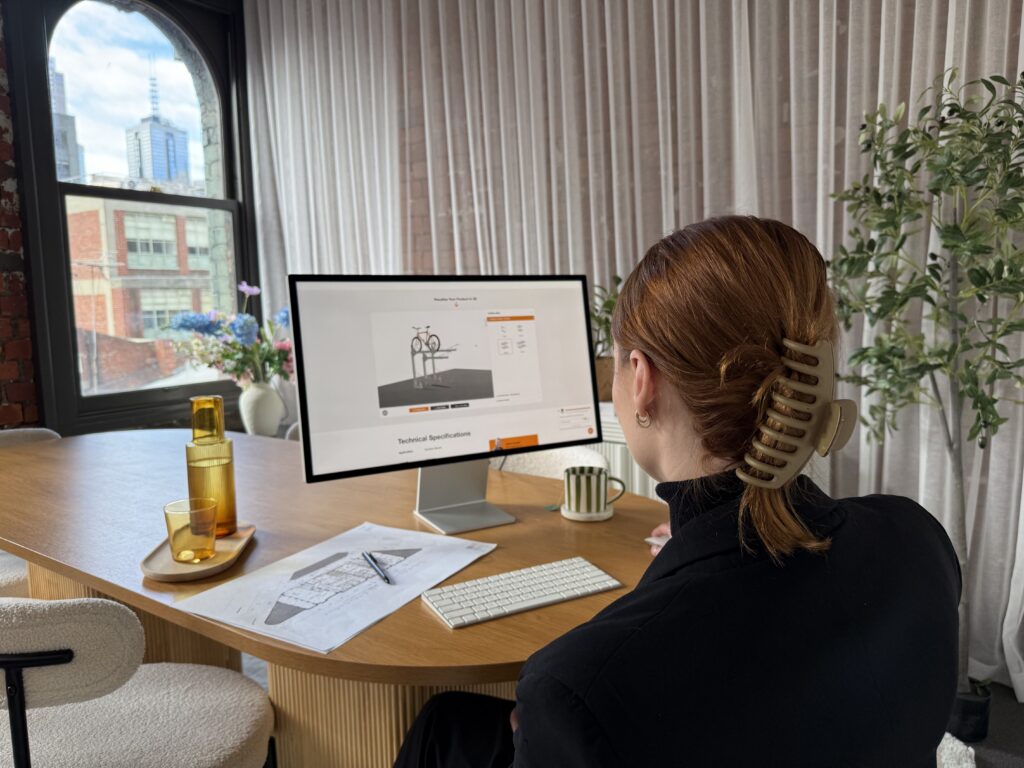
Try our free Ezi360® Bike Storage Planner to develop bike storage layouts, optimise capacity and support compliance from the earliest design stages.
How Classic Architectural Group Helps
With extensive experience delivering safety and access systems across Australia, Classic Architectural Group designs and supplies architectural bike storage solutions for projects of all sizes. Offering customisable options for councils, property developers, and architects, our team provides expert guidance to help you integrate bike storage seamlessly with broader site infrastructure and surrounding architectural elements.
Designed to support AS 2890.3 and NCC requirements, and backed by technical expertise and nationwide capability, we help simplify the specification process from product selection through to delivery. From stairs and entrances to bike storage, bollards, and car park safety, our products are built for durability in Australian conditions, providing confidence throughout your project’s lifecycle.
Contact us today for project-specific advice on bike storage design, product selection, and compliance requirements.