Key Takeaways:
- Not all bollards are the same – they all have different needs when it comes to maintenance and repair.
- Australia’s diverse climates require specific strategies for maintaining bollards, particularly on coastlines and under high UV conditions.
- Keeping a maintenance log of all bollard inspections and repairs can help keep track of recurring issues, identify high-risks, and ensure compliance.
In Australia’s coastal, high-UV, and high-traffic environments, bollards don’t usually fail suddenly: they deteriorate quietly. That’s why proactive inspection and maintenance are critical for facility managers. Without a structured inspection approach, minor issues such as corrosion or loosening fixings can escalate into structural failure, at great cost to businesses.
In this article, we share a complete guide to bollard maintenance that lays out a structured, environment-specific process to catch issues before they become liabilities.
Why Bollard Maintenance Matters for Facility Managers
Safety bollards are a long-term asset and provide essential protection in public and commercial spaces. Their effectiveness, however, depends entirely on their condition. With proper care, they can last decades, which is why facility managers need to keep them in check.
Beyond their role as an asset, there are other benefits to maintaining bollards, such as:
- Impact protection: they safeguard people, buildings, assets, and infrastructure from accidents or intentional ram raids.
- Operational continuity: When bollards absorb impact, operations can continue without damage to critical assets like machinery, entry/exit points, etc.
- Risk mitigation: Bollards act as both visual and physical deterrents – their presence and condition play a key role in reducing risk.
- Duty of care: Safe Work Australia states that facility managers have a duty of care to keep the workplace safe with ongoing bollard maintenance to protect people, infrastructure and assets.
- Cost savings: It’s more cost-effective to maintain each unit
| Disruption, compliance retesting, and a gap period without protection are risks in addition to the replacement cost. |
A Step-by-Step Bollard Maintenance Checklist
To make sure you don’t miss a thing, we’ve put together a handy 5 step process to check the condition of your bollards. This checklist will only be useful if you conduct regular inspections, based on the bollard material, environment, and climate. Set a fixed schedule with reminders to stay on top of maintenance.
1. Visual Bollard Inspection
Start with a simple visual check to look for:
- Dents
- Leaning to one side, or
- Deformation.
2. Surface & Coating Condition
Inspect the external finish carefully. Check for:
- Tea staining, rust or corrosion, often seen on stainless steel bollards in coastal areas, which can be fixed by using a stainless steel cleaner or mild solution by wiping in the direction of the grain with a soft cloth
- Peeling or chipped paint or coating, a common issue for powder-coated (retouch the paint) and galvanised steel bollards (apply a new zinc-rich galvanised spray or paint), and
- Scratches or discolouration (especially reflective markings).
3. Base & Fixings
Examine the base and these connection points:
- Dirt or debris buildup on the anchors and base plate
- Loose bolts
- Cracked concrete, or
- Movement at the base.
We see these issues often on surface-mounted bollards that have and removable bollards that have mechanical components. You can clean any base plate and tighten loose bolts to maintain optimal bollard function. And apply lubricant to the hinges of any locking system for smoother operation.
4. Alignment & Positioning
Incorrectly-positioned or misaligned bollards are a risk even if the bollard appears intact. In case of an accident or ram raid, they won’t absorb impact effectively, and may even end up damaging the assets they’re meant to protect. So keep an eye on their alignment and positioning.
5. Post-Impact Inspection
If there is a collision, check the internal structure, even if the damage isn’t visible externally, and inspect the surrounding surfaces and substrate for any issues.
| As a facility manager, you can likely handle basic maintenance, like minor paint touch-ups, but in the case of an impact, call in the professionals. Contact the team at Classic Architectural Group and we’ll get it sorted. |
Why Australia Needs a Different Bollard Maintenance Approach
Australia’s diverse climate is uniquely demanding and in our experience, there’s unique conditions that accelerate bollard wear and tear, requiring tailored maintenance approaches to each environment. Here’s a summary:
| Environment | Key Risk | What to Check | Recommended Frequency |
| Coastal | Salt corrosion | Rust, staining, coatings | Monthly |
| High UV | Fading, brittleness | Coating, reflectivity | Quarterly |
| High traffic | Impact fatigue | Dents, alignment | Monthly |
| Industrial | Chemical exposure | Surface integrity | Monthly |
| Hot climates | Ground movement | Base stability | Quarterly |
Coastal Corrosion (Biggest Issue)
Salt in the air accelerates oxidation – this damage can go unseen without proper inspection and maintenance. Stainless steel develops tea staining, powder coatings degrade more quickly, and mechanical components (bolts and fixings) can corrode.
To combat coastal corrosion, you can:
- Conduct minimum monthly bollard inspections
- Keep an eye out for rust, tea staining, and discolouration
- Touch up any bubbling or chalking on powder-coated bollards (where required), and
- Wash bollards regularly with water and mild detergent to remove salt buildup.
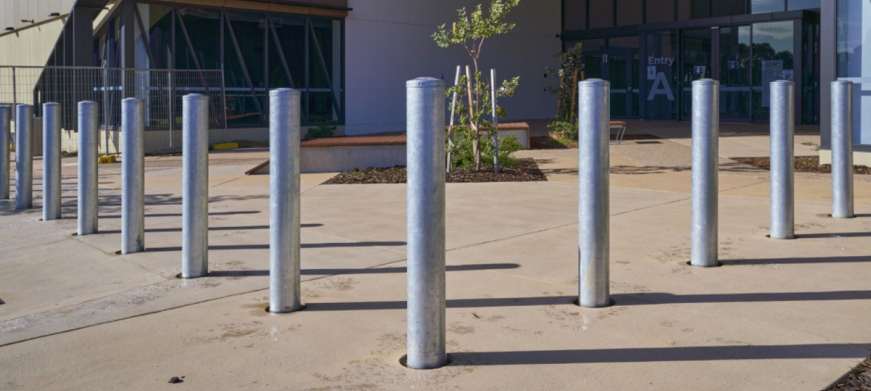
UV Degradation
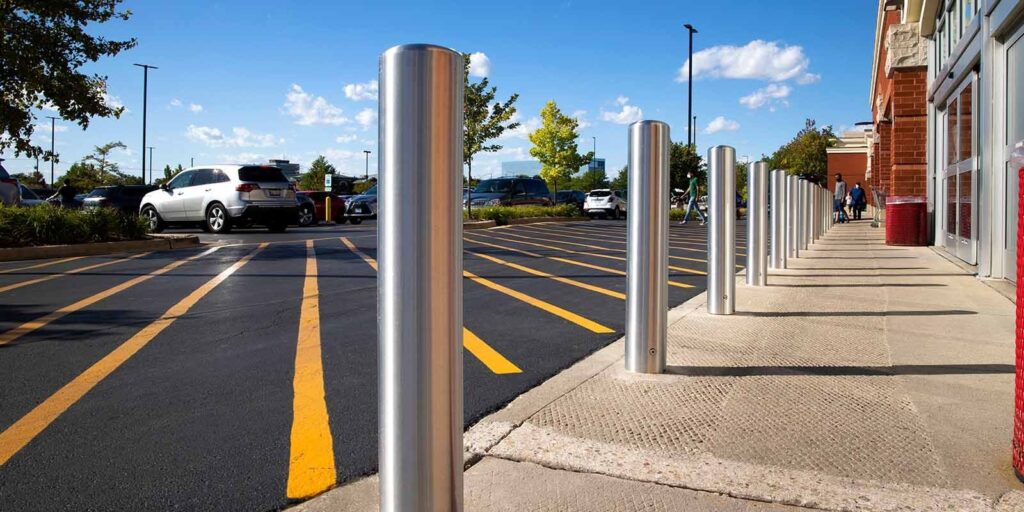
Constant exposure to Australia’s harsh UV radiation levels can degrade or discolour outdoor bollards. Especially in areas with high sun exposure, like the Northern Territory, Western Australia and Queensland.
While stainless and galvanised steel bollards fare well under sun exposure, powder-coated bollards are the quickest to degrade. The heat and UV radiation cause the powder coating to fade, chalk, or become brittle, and reflective strips to fade over time. This can become a safety risk for vehicles if they can’t see bollards due to faded or cracked powder coating or reflective strips.
To maintain bollards under constant UV exposure, you can:
- Check for fading, cracking, or brittleness in coatings
- Repair minor coating damage with touch-up paint, and
- Test reflective visibility in both daylight and low-light conditions (at night).
Heat Expansion & Ground Movement
Australia’s hot summers, cold winters, and extreme temperature changes can cause expansion and contraction in substrates such as concrete and asphalt. Bollards can loosen when the substrate expands and anchors might shift, which leads to misalignment. This compromises its ability to handle impact, creating a higher risk of failure under accidental impact or ram raids.
To manage heat expansion, you can:
- Check for movement of the base plate, and tighten any loose bolts or fixings
- Look for cracks in the substrate surrounding the bollard, and
- Inspect for any leaning or misalignment.
High Traffic Impact in Urban Areas
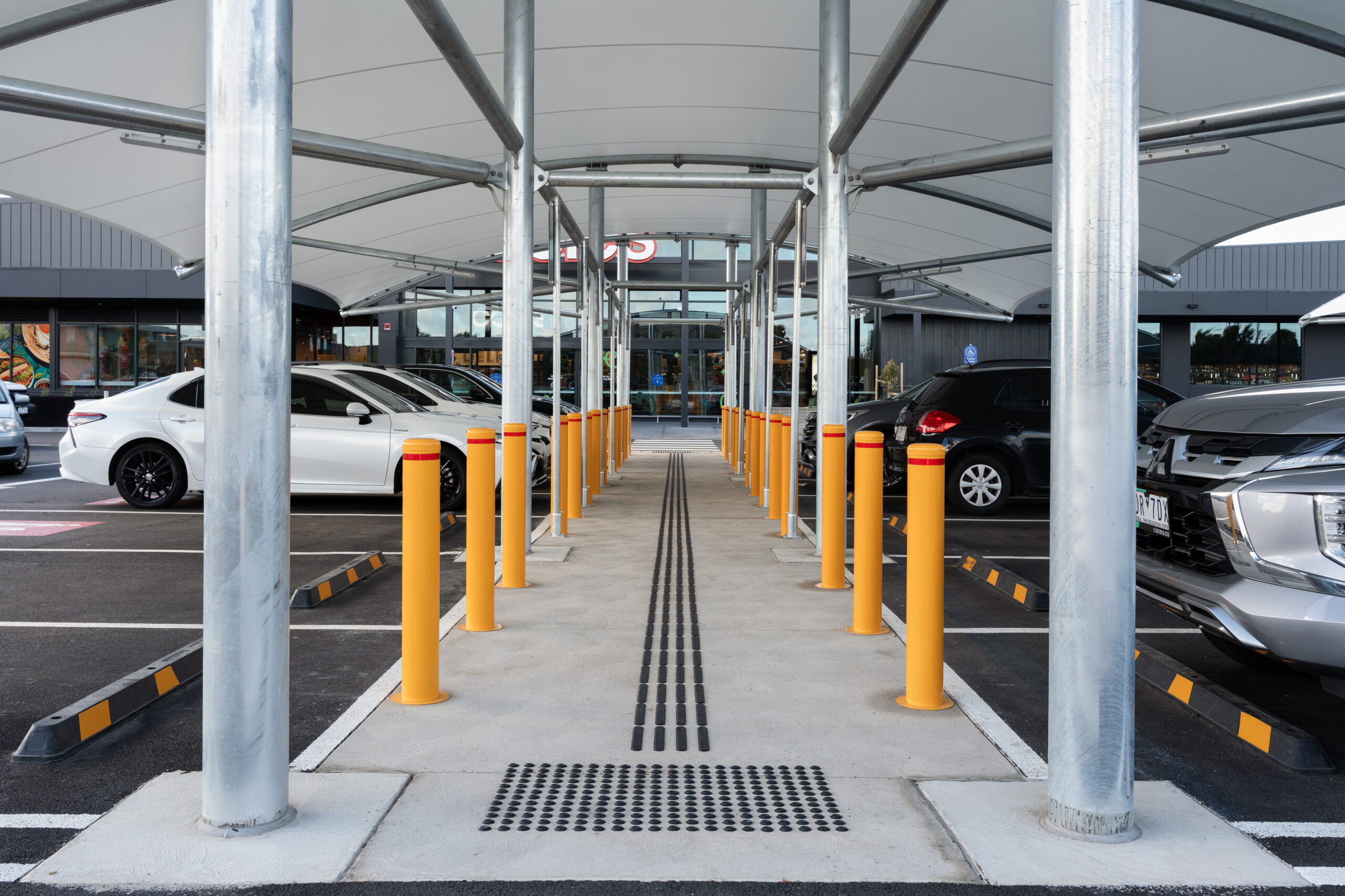
High-traffic areas include warehouses and distribution centres, indoor and outdoor car parks, and shopping centres. With higher than normal levels of both vehicular and pedestrian traffic, bollards in these areas experience regular low-speed impacts. This means the bollard’s internal structure can weaken gradually leaving it vulnerable to failure in a major impact or intentional ram raid.
In high-traffic areas, make sure you:
- Look for minor dents
- Identify zones with frequent impacts, such as corners in car parks, and
- Track impact history and maintain a log so it’s known which areas need the most attention.
Industrial & Mining Environments
Demanding environments like mining sites and logistics and distribution hubs expose bollards to dust, chemicals, and impacts from heavy machinery, such as forklifts. This accelerates wear and tear. Exposure to chemicals can accelerate surface corrosion and cause surface damage like chipping and peeling.
If you’re in an industrial environment, you should:
● Clean off oil, chemical and dust buildup regularly, and
● Increase inspection and cleaning frequency in demanding environments.
Drainage & Water Issues
Bad drainage is an often-overlooked but critical issue. Water collects in bollard sleeves and underground pits, leading to internal corrosion and mechanical failure. In-ground sleeves can rust or corrode due to water accumulation making the bollard’s base unstable, compromising its performance if there’s an accident or ram raid.
If your facility has drainage issues:
- Check and clear drainage holes
- Monitor water pooling at the base of the bollard, and
- Clear debris regularly.
Avoid These Common Bollard Maintenance Mistakes
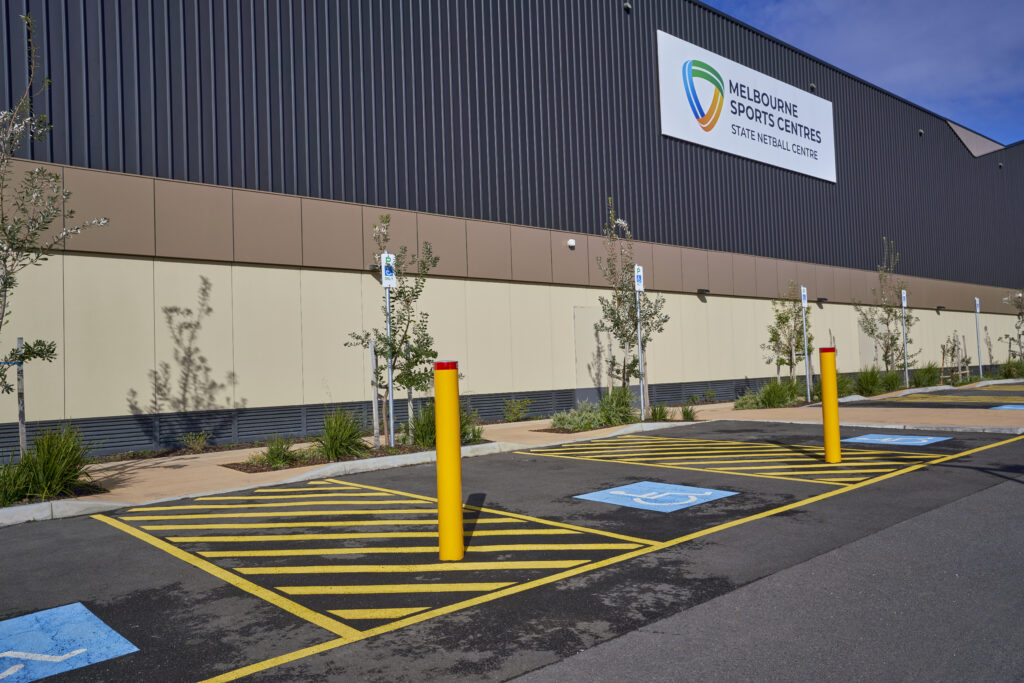
As a facility manager, there’s some obvious (and not so obvious) mistakes you might make when maintaining bollards. Treating all bollards the same and applying a one-size-fits-all process can lead to missed risks – so here’s what to keep front of mind:
- Don’t ignore minor damage, it might be an early warning sign
- Check anchors and foundations regularly to increase bollard lifespan
- Use the right cleaning products to avoid damaging surfaces, and
- Document all maintenance and impacts in proper records to keep track of recurring issues, identify high-risk areas, and demonstrate compliance.
Contact Classic Architectural Group for Bollard Risk Management
At Classic Architectural Group, we support you throughout the full lifecycle of your safety bollard, from installation through to site and environment-specific maintenance and risk management. Get in touch for a tailored assessment or quote today.