
Beyond creating visually appealing spaces, ensuring accessibility is both a legal obligation and a fundamental part of modern building design.
According to the Australian Bureau of Statistics, more than one in five Australians were living with a disability in 2022, with prevalence increasing significantly with age. And as Australia’s population continues to age, with people aged 65 and over set to double by 2047, the need for inclusive public and commercial environments will only become more important.
From creating step-free entrances to providing accessible toilets and amenities, accessible design helps ensure people of all ages and abilities can navigate shared spaces safely and independently. For architects and building professionals, accessibility compliance is about creating environments that promote equal access and reduce risk.
In this article, we’ll explore the key accessibility requirements for public and commercial buildings, and how integrated safety and access products can help achieve compliance with confidence.
What Is Accessibility Compliance?
Accessibility compliance is the process of designing and constructing accessible commercial buildings for safe and independent usage by people of all ages and abilities. In practical terms, it means ensuring that the built environment meets relevant Australian regulations, standards, and codes governing access and mobility.
Regularly reviewed and updated, the key accessibility frameworks in Australia include:
- Disability Discrimination Act (DDA)
- National Construction Code (NCC)
- Disability (Access to Premises — Buildings) Standards
- Australian Standards AS1428.1: Design for access and mobility
These requirements apply to new developments and, in many cases, to building upgrades and refurbishments as well.
In addition to meeting legal obligations, accessible design can also contribute to sustainability certifications and awards, such as Green Star ratings. Projects aiming for Green Star ratings can earn specific points under categories such as “People” and “Places”, which recognise building and community developments that prioritise safe, accessible, and inclusive design.
Which Public and Commercial Buildings Must Meet Accessibility Compliance Requirements
Except for private, detached homes, accessibility requirements apply to all public, commercial, and multi-residential buildings in Australia. This includes new building work as well as upgrades to existing buildings.
Common building types that must meet accessibility compliance requirements include:
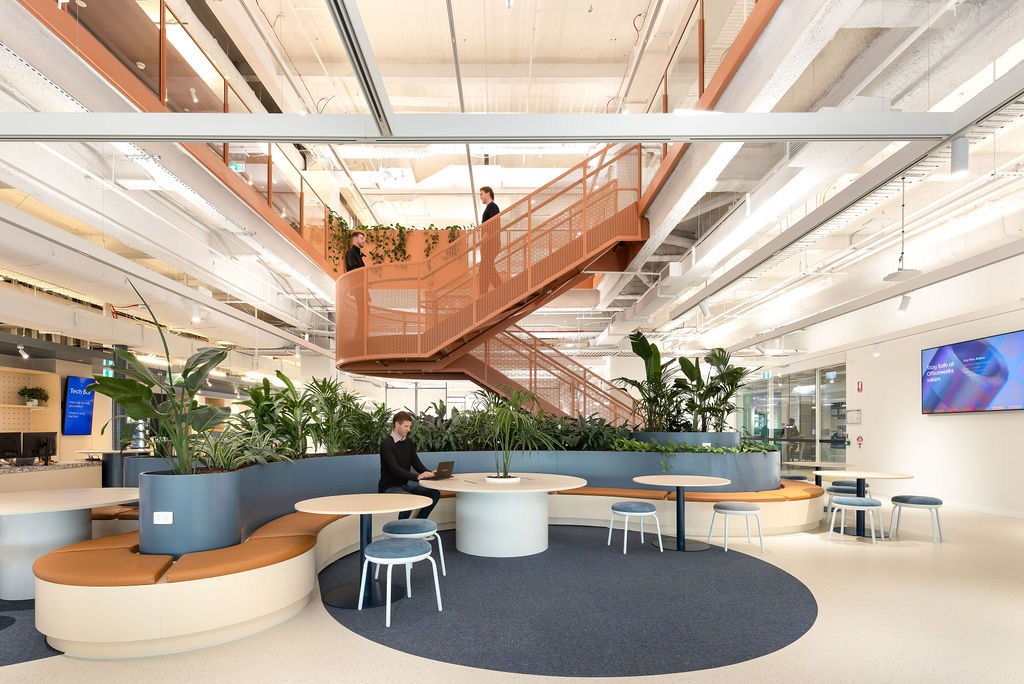
- Office buildings
- Shopping centres
- Schools and universities
- Healthcare facilities
- Restaurants and cafes
- Hotels and accommodation
- Community centres
- Government buildings
- Apartment buildings
- Entertainment venues
- Sports and recreation facilities
- Industrial buildings and warehouses
- Public spaces and structures
- Public transport hubs
Discover the importance of making workplaces accessible for individuals with disabilities.
Are Any Buildings Exempt?
While most public and commercial buildings are required to meet accessibility standards, certain exemptions and special considerations may apply depending on the building type and intended use.
Examples where possible exemptions may apply include:
- Heritage buildings where upgrades may adversely affect historical significance
- Small buildings with limited public access
- Areas not normally accessible to the public
- Industrial or utility areas such as plant rooms, mining facilities, and waste management sites
- Situations where full compliance would involve unjustifiable hardship
While a building might be exempt from certain accessibility compliance standards, it remains subject to the Disability Discrimination Act (DDA). This means individuals can still lodge a complaint if they believe they have been unreasonably denied access.
For this reason, project managers and building owners should aim to improve accessibility wherever possible.
Why Accessibility Compliance Matters
Legal Responsibilities
Accessibility compliance is a legal requirement for most public and commercial developments in Australia. Failing to meet compliance standards can lead to project delays, costly redesigns, retrofit works, and potential legal disputes.
To keep projects on track and maintain compliance throughout the building process, accessibility should be considered from the planning and design stages.

Integrating compliant safety and access features from the outset allows greater design flexibility, ensuring alignment with overall architectural goals while also being more cost-effective and efficient to implement than making changes later.
Better Experiences for Everyone
While accessibility compliance establishes the minimum legal requirements, inclusive design goes further by ensuring that 80-90% of people can use a building confidently and comfortably.
Prioritising accessible public buildings and infrastructure ensures equal, dignified access for everyone, including:
- People with mobility, sensory, and cognitive disabilities
- People using wheelchairs and mobility aids
- Older Australians
- Parents and carers with prams
- People with temporary injuries
Whether used for personal, professional, or community purposes, accessible environments help reduce barriers to participation and strengthen social inclusion, improve overall health and well-being.
Beyond everyday functionality, accessible design also helps future-proof buildings. This is especially relevant given Australia’s ageing population, where demand for adaptable, inclusive spaces is projected to rise over time.
Key Accessibility Requirements for Public Buildings
Accessible Entrances
Entrances are often the first point of contact with a building, making them crucial for accessibility.
Key requirements typically include:
- Step-free access wherever possible
- Ramps that comply with gradient, width, and landing requirements
- Automatic or easy-to-open doors
- Clearly defined and accessible paths of travel from key entry points
Accessible entrances ensure that all users, including those with mobility aids, prams, or temporary injuries, can safely and independently enter and leave a public building.
The Role of Entrance Matting in Increasing Access
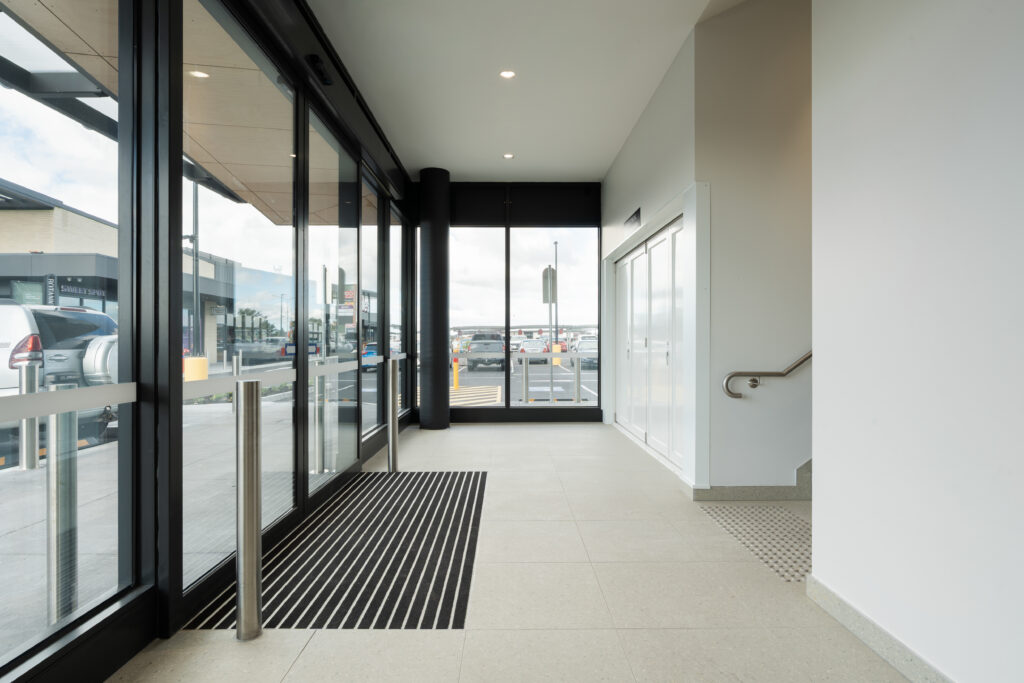
Commercial entrance mats are typically installed at a building’s main entry points to manage the spread of dirt, dust and moisture. When correctly specified and installed, they improve slip resistance and help reduce the risk of slips and falls, which can lead to liability.
Read more about enhancing access with high-end entrance matting for hotels.
Accessible Toilets and Amenities
Accessible bathroom facilities must be designed to enable safe, independent use by people of all abilities.
Key requirements typically include:
- Braille and tactile signage
- Compliant bathroom layout and circulation space
- Easy-to-use door handles and locks
- Sufficient space for wheelchair access and turning circles, as well as other mobility aids
- Strategically positioned grab rails for extra support and stability
- Clear access to bathroom fixtures such as sinks, toilets, and hand dryers
Lift Access
Lift accessibility requires lifts to be safe and usable by people with disabilities, and compliant with commercial building accessibility standards.
Some of these accessibility requirements include:
- Minimum dimensions for door opening and floor area
- Positioning of external and internal buttons, including braille buttons
- Handrail installation
- Automatic audible information
- Emergency hands-free communication
- Warning tactile indicators are installed at the edge of the lift landing
- Tactile and visual signage
Stair Access
Indoor and outdoor stairs are a key navigation element in most public buildings and must meet specific requirements to maximise safety and minimise risk.
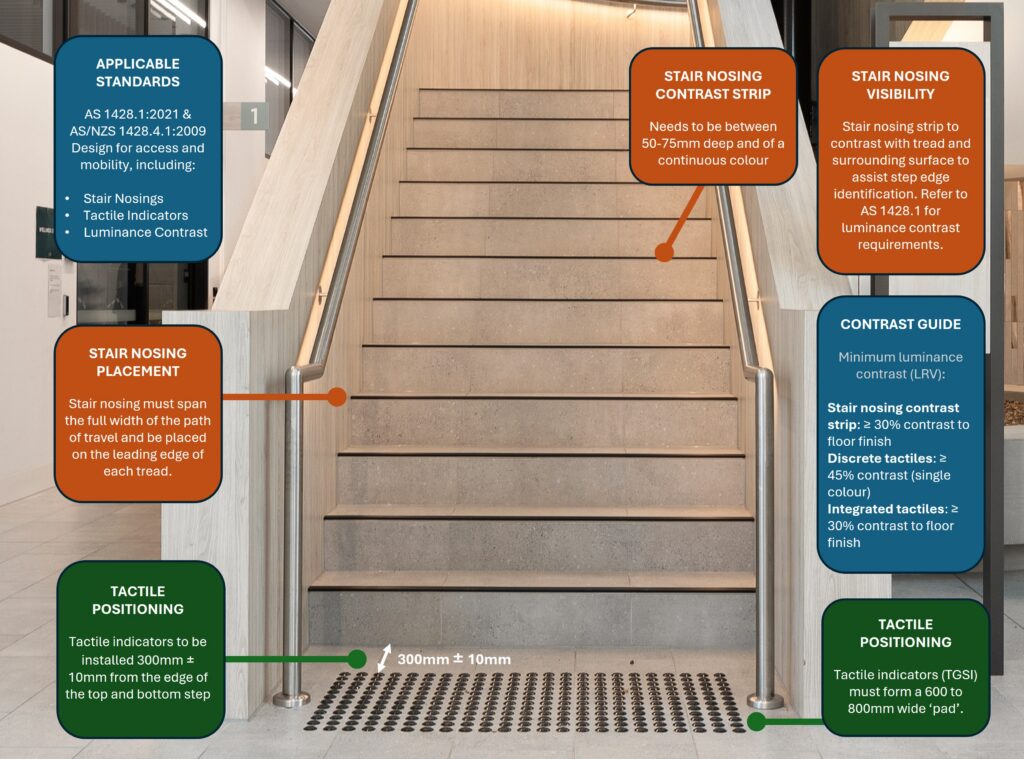
Key accessibility requirements include:
- Slip-resistant stair nosings installed to define step edges
- High luminance contrast between steps and stair nosings
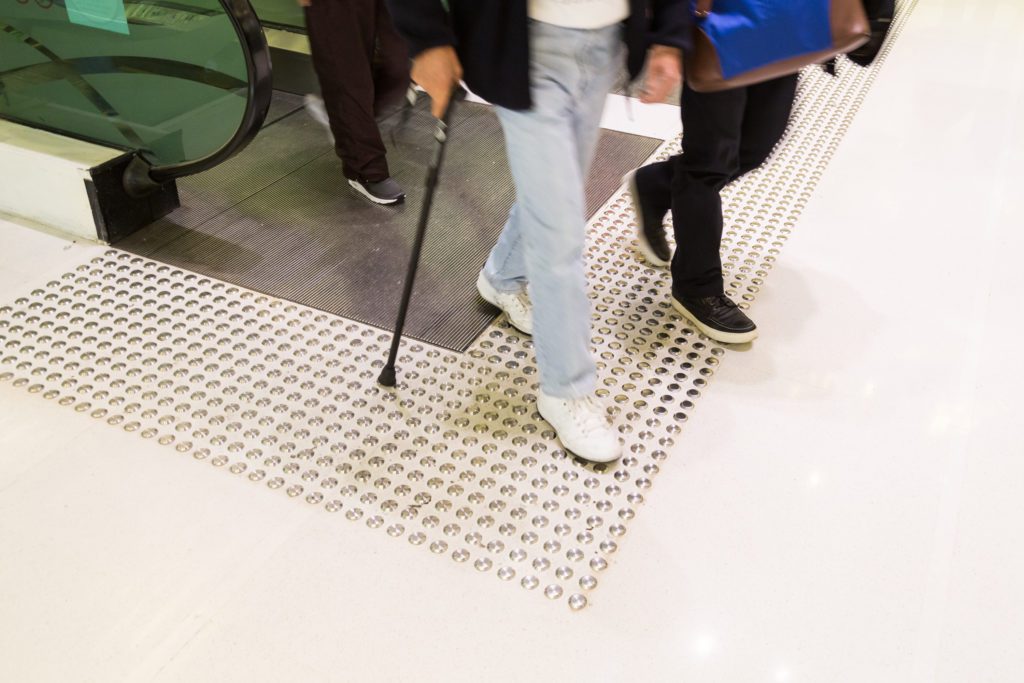
- Tactile indicators installed at approach and hazard points
- Compliant stair and landing dimensions
- Adequate clearances and unobstructed access
- Handrails installed on both sides
Signage and Wayfinding
Clear signage and wayfinding measures must be installed to help users navigate buildings independently and confidently.
Key accessibility requirements include:
- Installing braille and tactile signage at key decision points
- Ensuring high visual contrast between text and background
- Consistent placement and height for readability
- Using universal symbols for easy recognition
- Tactile ground surface indicators to assist navigation and orientation
Emergency Exits and Evacuation Access
Accessible emergency measures ensure that all occupants can safely evacuate a building during an emergency.
Key requirements include:
- Clear and unobstructed emergency exit pathways
- Evacuation procedures for people with disabilities or mobility limitations
- Highly visible emergency signage and adequate lighting
- Refuge areas and safe evacuation points, where required
- Compliance with NCC emergency egress requirements
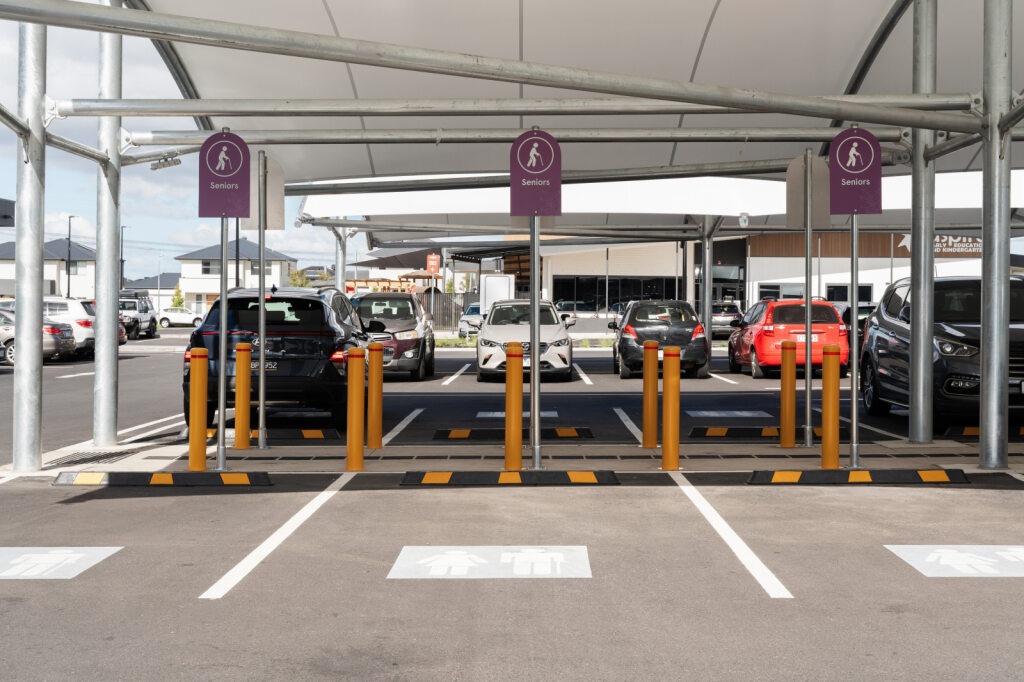
Accessible Parking
Accessible parking ensures safe, convenient access for drivers to and from their vehicles and to the building entrance. This also includes users being picked up or dropped off, as well as pedestrians navigating the parking area.
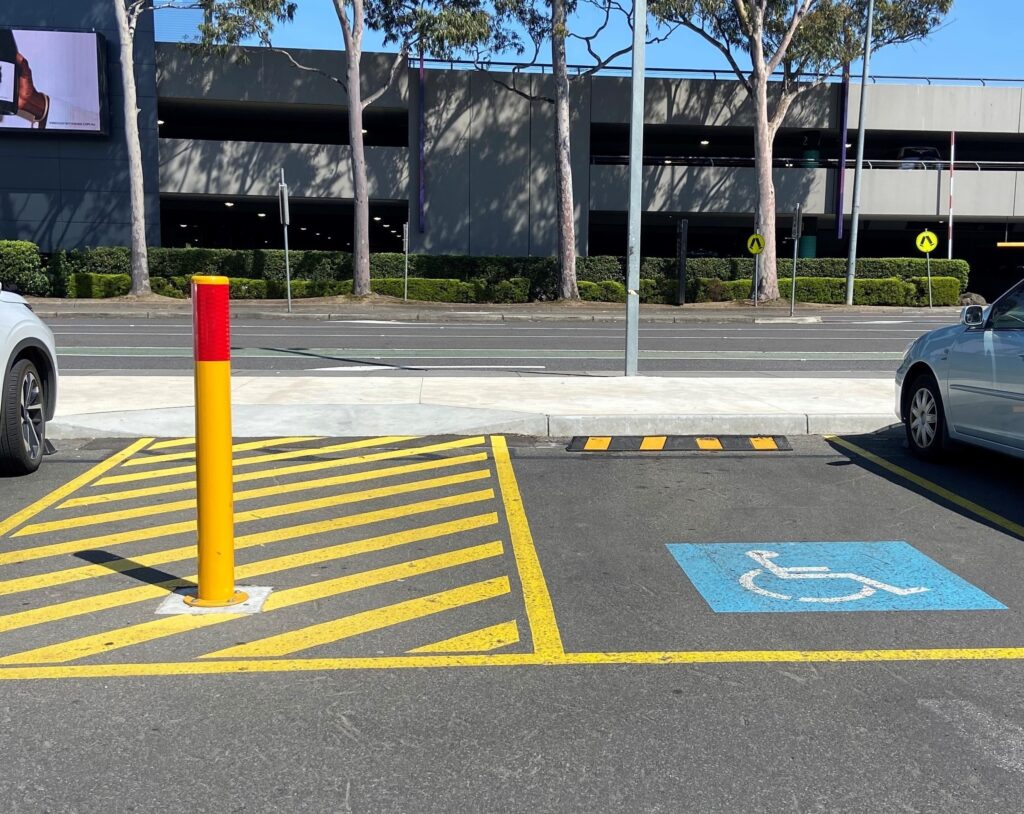
Key requirements include:
- Clearly marked accessible parking bays
- Kerb ramps for smooth transitions between levels
- Safe designated drop-off and pick-up zones
- Car park bollards to control and limit access
- Wheel stops to help drivers park accurately within designated spaces
- Safety mirrors to eliminate blind spots
- Car park signage to provide clear guidance
- Speed humps to control speeds and protect foot traffic at busy access points
Learn more about parking requirements by Australian Standards.
Common Accessibility Compliance Mistakes
Projects can fail to meet accessibility compliance requirements when key details are missed during planning and specification.
Some of the most common issues include narrow doorways, non-compliant ramps, inaccessible restrooms, inadequate signage, and a lack of accessible parking bays. Missing tactile indicators and obstructed pathways can also significantly reduce safe navigation for people who are blind or vision-impaired.
Compliance issues often arise when accessibility is considered too late in the design or construction process. This is especially common during renovations and extensions, when existing constraints are not always reassessed against current accessibility standards. In these situations, retrofitting accessibility features can become significantly more expensive and disruptive than integrating compliant solutions from the outset.
Beyond specification and design, correct installation and ongoing maintenance are equally important. Accessibility features must be installed in accordance with relevant standards to perform as intended, and regular inspections are essential to ensure they remain safe and functional over time. Any products showing significant wear, damage, or deterioration should be repaired or replaced promptly to prevent them from becoming a safety hazard or compliance risk.
Case Study: Botanical Village Mickleham
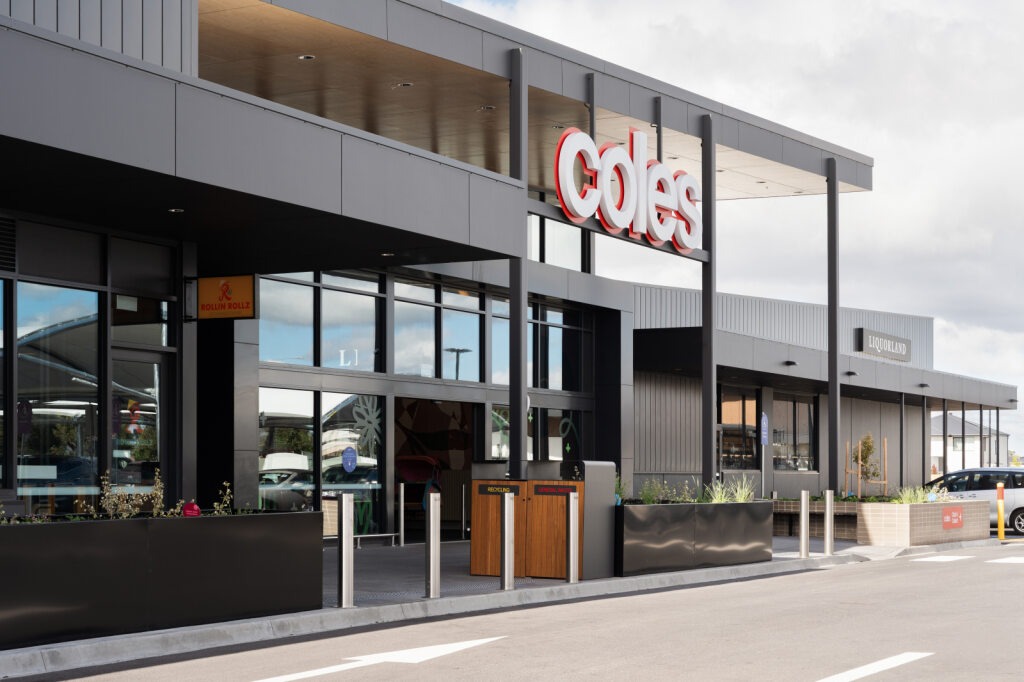
Located in Melbourne’s rapidly growing northern corridor, Botanical Village Mickleham is a vibrant mixed-use retail and community precinct developed by Oreana.
Featuring a Coles supermarket and a range of specialty retail, dining, medical, and fitness facilities, along with townhomes and an early learning centre, the development has been thoughtfully designed to meet the evolving needs of the local community.
Classic Architectural Group was proud to supply and install a range of compliant safety and accessibility solutions throughout the development, helping deliver safer, more inclusive environments across the retail and community precinct.
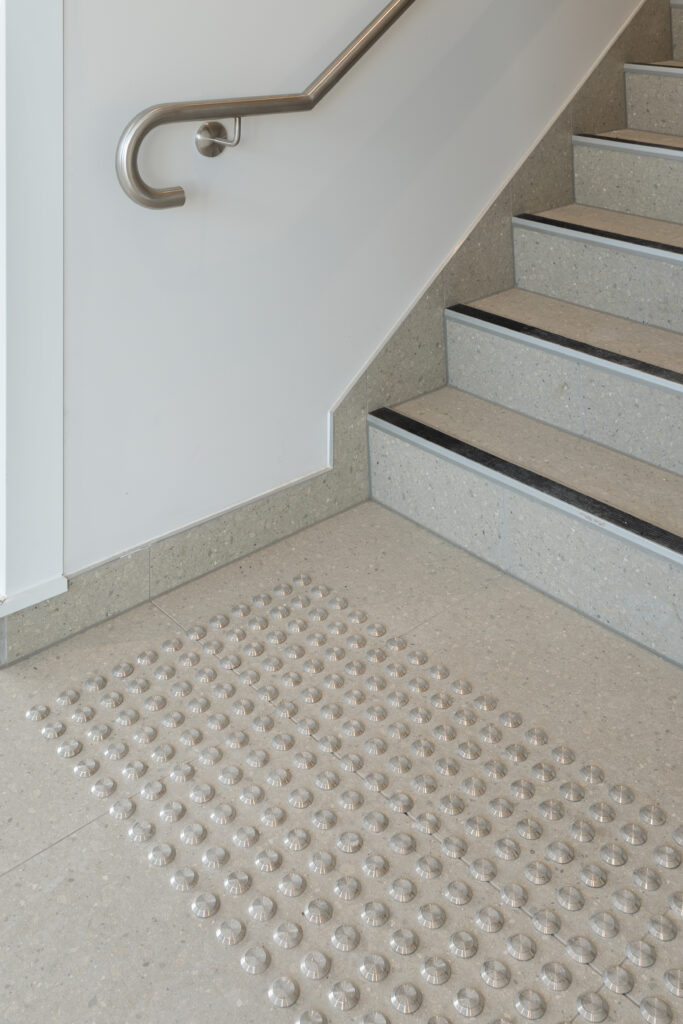
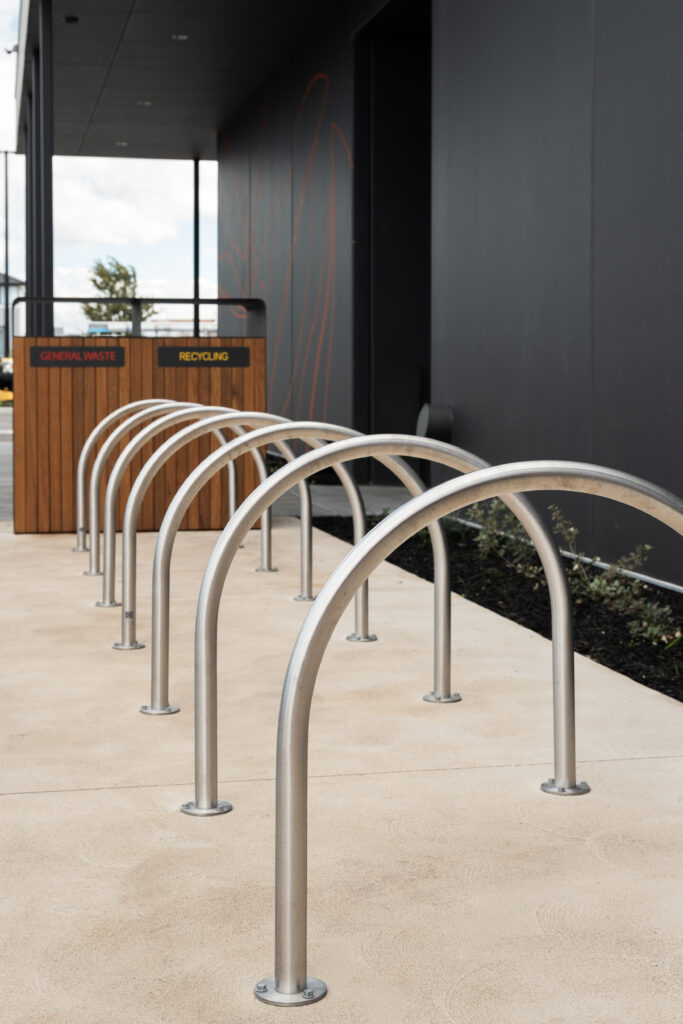
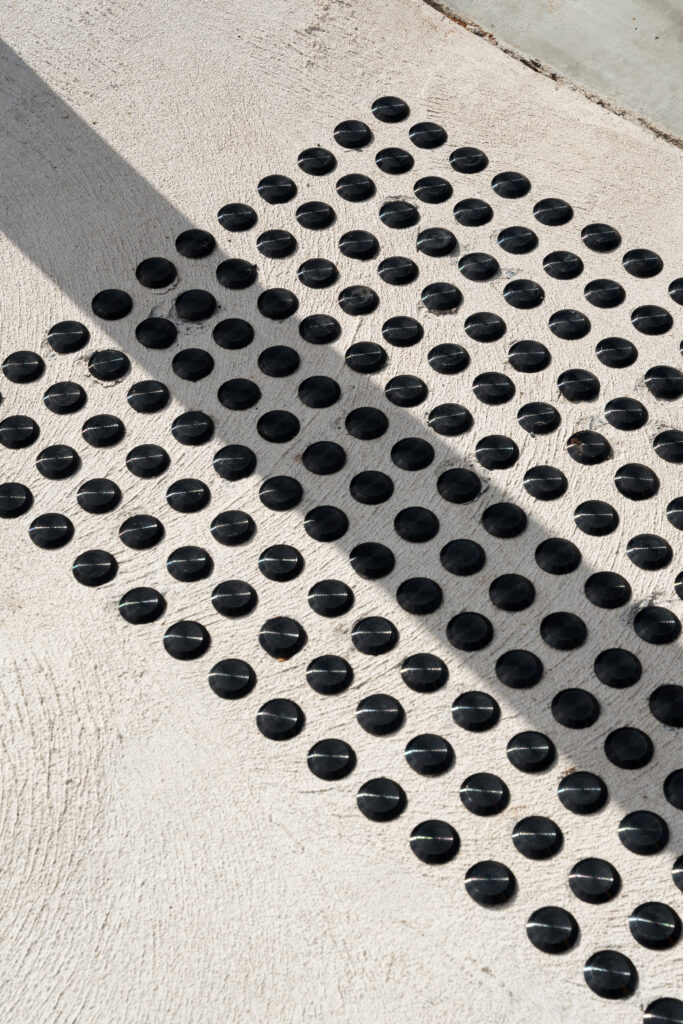
Accommodating parents with prams and older Australians, as well as people living with disabilities, accessibility compliance is essential to ensure people of all ages and abilities can move through the precinct safely and confidently.
Designing Public Spaces that Work for Everyone
Aside from meeting legal requirements, creating accessible spaces improves safety and usability, while ensuring people of all abilities can navigate public buildings and shared environments with confidence.
Early planning is one of the most effective ways to reduce compliance risks and avoid costly reworks, allowing accessibility features to be seamlessly incorporated into the overall design rather than retrofitted as an afterthought. Working with experienced compliance professionals can further ensure projects align with relevant Australian accessibility standards and regulations, delivering practical, high-quality outcomes.
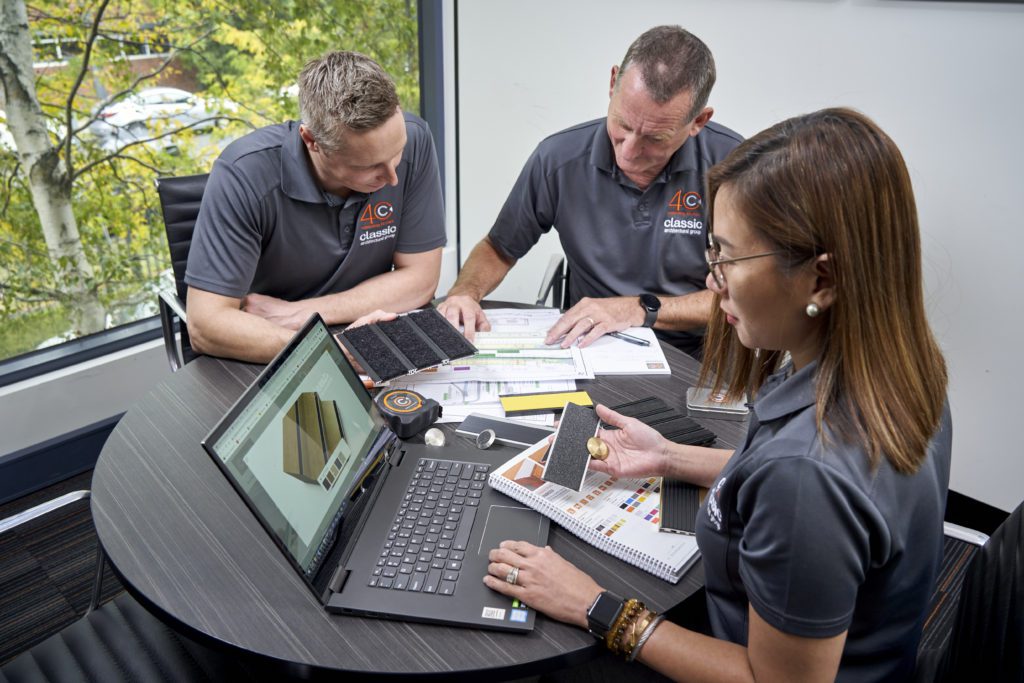
Focusing on accessible design also helps reduce exposure to future liability issues while enhancing property value and strengthening professional reputation within the industry. In addition, several prestigious architectural and construction awards in Australia recognise projects that go beyond minimum requirements, celebrating excellence in inclusive and accessible design.
At its core, prioritising accessibility is about making public, shared spaces more inclusive and welcoming for everyone, promoting diversity and improving quality of life across communities.
The Next Step Towards Accessible and Future-Ready Public Buildings
With more than 45 years of experience, Classic Architectural Group simplifies compliance complexity and risk by providing fully integrated access and safety solutions for projects of all sizes across Australia.
We deliver certainty at every stage with compliant, architecturally designed products for stairs, floors, entrances, bike storage, bollards, and car park environments.
Need guidance on accessibility compliance for your next public or commercial project? Contact our team to discuss compliant and inclusive building solutions today.