
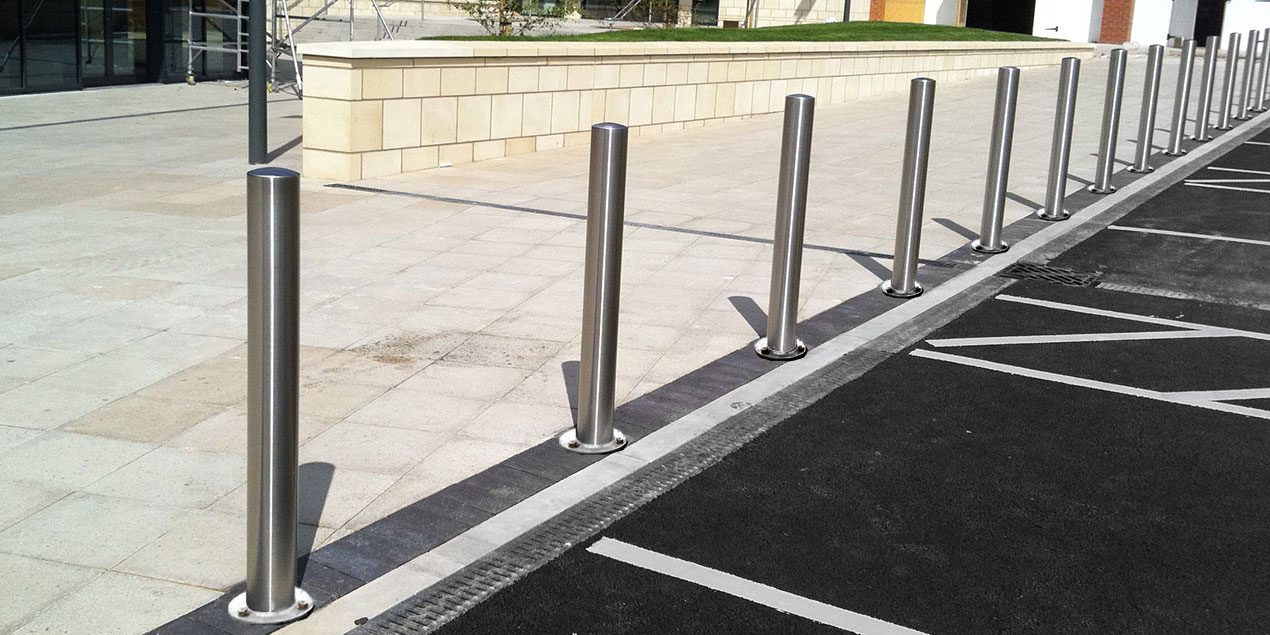
Car parks are busy spaces where vehicles, pedestrians, and property share limited room. Without clear boundaries and protective measures, accidents, collisions, and damage can easily occur.
Used alongside other car park safety solutions, wheel stops and bollards help prevent accidents, protect assets, and keep people safe.
In this blog, we’ll explore compliant car park safety equipment, outline the relevant standards, highlight the benefits of wheel stops and bollards, and provide guidance on choosing the right products for your project to ensure safety, accessibility, and peace of mind.
Australian Standards for Car Park Safety
AS 2890 is the primary standard for car park design and safety in Australia, applying to new commercial, residential, and public developments, and potentially to renovations or expansions of existing facilities.
It sets out key requirements for the design, layout, and operation of off-street commercial car parks, including the installation of car park safety equipment such as bollards, wheel stops, speed humps, signage and bike storage.
Specific parts of the standard address different aspects of parking facilities, for example, off-street car parking (AS 2890.1) and parking for people with disabilities (AS 2890.6).
For a complete overview of all relevant standards, read our blog about Australian Standards for car parks or download our Car Park Safety Compliance Guide.
What Are Wheel Stops and Bollards?
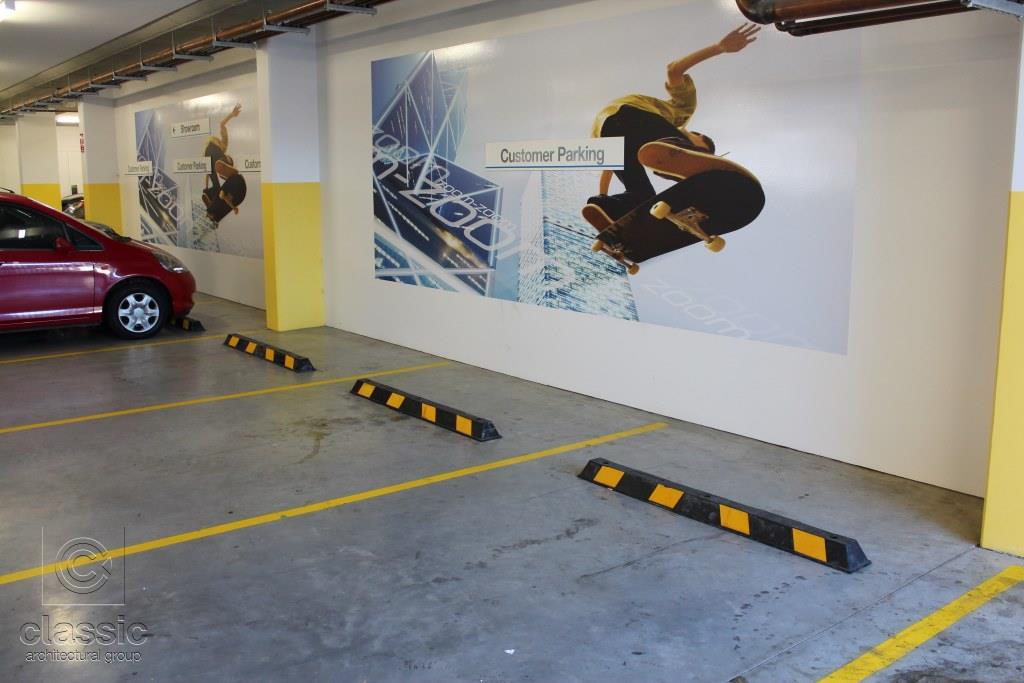
As part of a comprehensive car park protection solution, wheel stops are low-profile barriers installed at the end of parking bays to prevent vehicles from rolling into kerbs, walls, or neighbouring cars.
When installed correctly—highly visible, well-anchored, and regularly inspected—they also help keep footpaths and accessible parking bays clear, ensuring safe, unobstructed access for pedestrians.
On the other hand, car park bollards are strong upright barriers that protect both users and assets from vehicular impact.
Available in a variety of types to suit different applications, they are also used to prevent vehicles from entering restricted or unsafe areas.
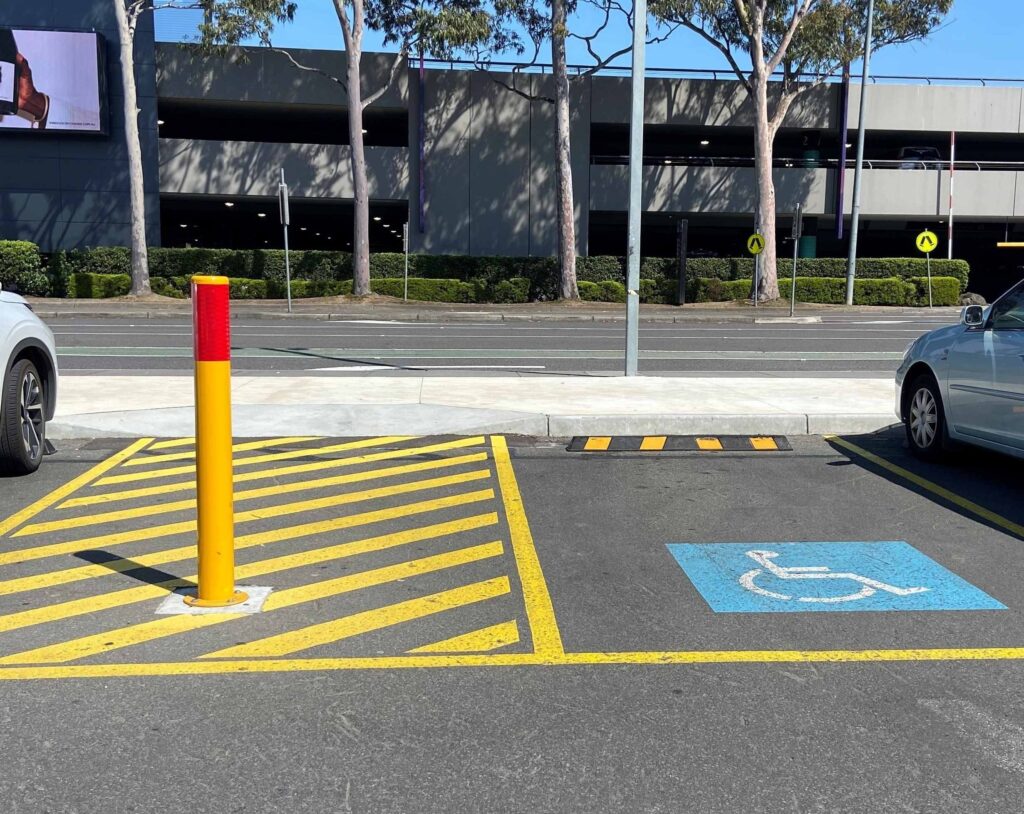
Both wheel stops and car park bollards play an essential, complementary role in car park protection: wheel stops improve parking accuracy, while bollards prevent vehicle intrusion and enhance visibility in busy, high-risk areas.
Installing Wheel Stops to Improve Car Park Safety
Classic offers high-quality, durable concrete wheel stops and rubber wheel stops, designed to last and fully compliant with Australian Standard AS 2890.1.
| Wheel Stop Type | Benefits | Use Cases |
Rubber Wheel Stop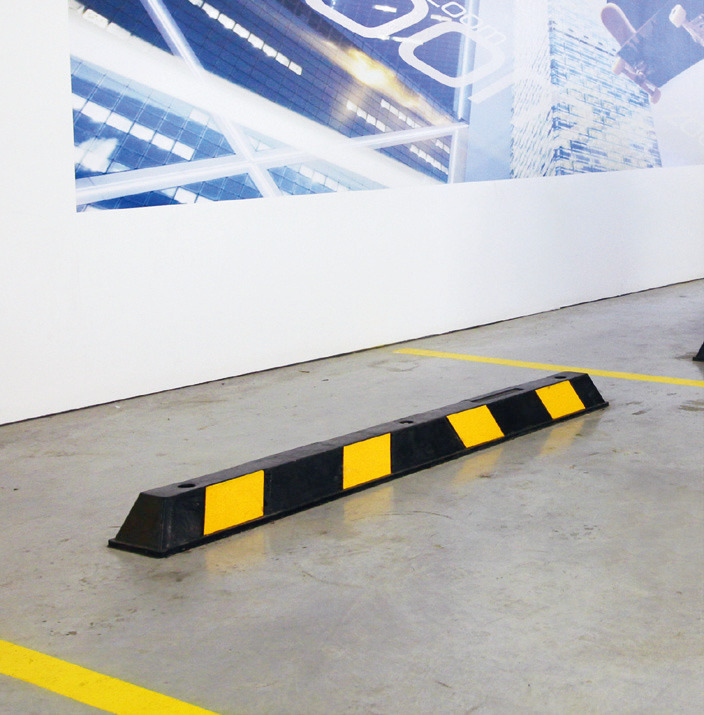 | › One-piece moulded construction—durable and robust › Won’t chip or corrode (unlike concrete or metal options) › Easy to install—supplied with all fixings and does not require heavy lifting equipment › Suitable for both bitumen/ asphalt and concrete surfaces › Compliant with AS2890.1-2004 | › Low- to medium-traffic car parks with asphalt or concrete surfaces › Sites requiring a high-visibility design, especially in low-light or busy car parks › Projects that require fast, easy installation without heavy equipment or special tools › Outdoor or high-exposure environments needing corrosion resistance |
Concrete Wheel Stop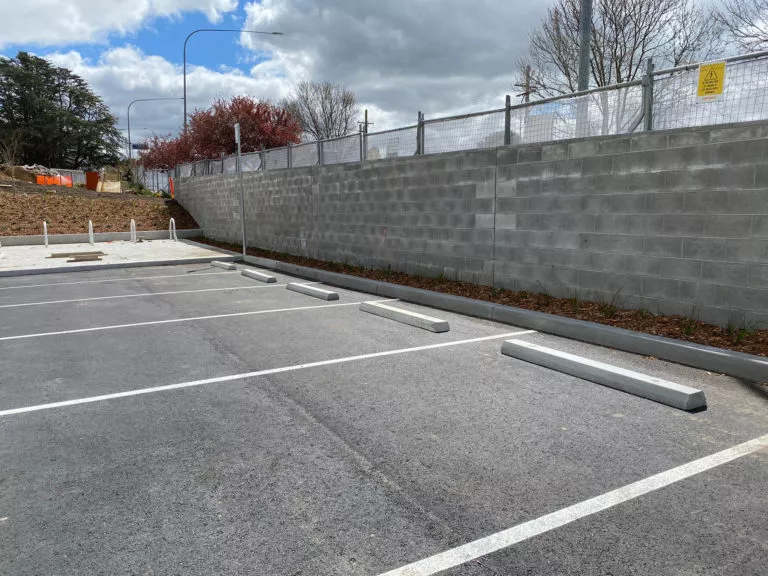 | › Constructed as a one-piece reinforced concrete block with internal steel rods › Extremely strong, stable and durable—less likely to shift or move under vehicle impact or over time › Resistant to corrosion and rot › Extremely long lifespan—can last decades before needing replacement › Ready for installation, supplied with all fixings | › High-traffic parking lots with frequent or heavy vehicle use › Parking areas bordering walls, fences, or fixed structures › Long-term, low-maintenance infrastructure projects › Sites requiring a heavy-duty, “set-and-forget” solution that can withstand heavy loads or repeated impacts |
For more information, please read our article dedicated to compliant wheel stops in Australia.
Using Car Park Bollards to Protect People and Property
The table below compares the five main types of parking bollards, including breakaway bollards, in-ground bollards, surface-mounted bollards, collapsible bollards, and removable bollards.
| Bollard Type | Benefits | Use Cases |
Breakaway Bollards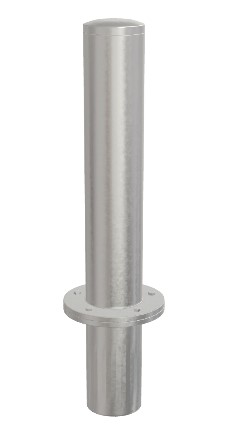 | › Galvanised or powder-coated steel construction for long-term durability › Simple cast-in installation › Cost-effective solution for high-traffic areas › Breakaway design reduces impact force on foundations to help protect underground services and surrounding pavements › Lower repair costs—only the top section requires replacement after impact | › Car parks and driveways with frequent vehicle movement › Warehouses, loading docks, industrial sites › Pedestrian and vehicle shared zones › Areas above underground utilities or sensitive surfaces › Council or commercial sites where fast, low-cost repairs are a priority. |
In-Ground Bollards | › Galvanised, stainless, or powder-coated steel options for weather protection › Fixed, concrete-set design for maximum strength › Strong security barrier for permanent applications › High vehicular impact resistance › Long-lasting performance, low maintenance | › Car parks and driveways with constant vehicle movement › Warehouses, loading docks, industrial sites › Building frontages, storefront protection, pedestrian zones › Perimeter security and access-control areas › Outdoor sites needing durable, corrosion-resistant bollards |
Surface-Mounted Bollards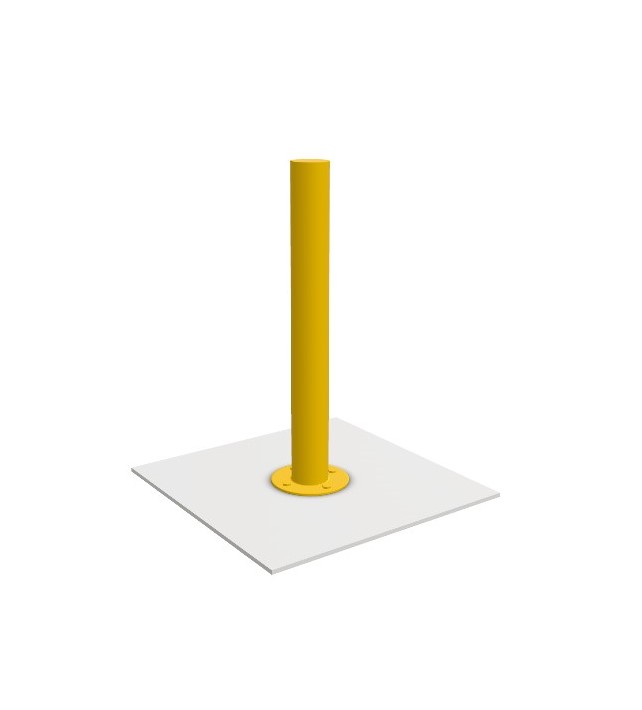 | › Made from durable steel with galvanised, stainless, or powder-coated options › Bolt-down install—fast installation, no digging required › Suitable for sites with underground services › Low maintenance | › Car parks and driveways › Pedestrian areas and access-control zones › Retrofits on existing concrete/asphalt › Warehouses with light-vehicle or forklift guidance › Areas needing bollards without major construction |
Collapsible Bollards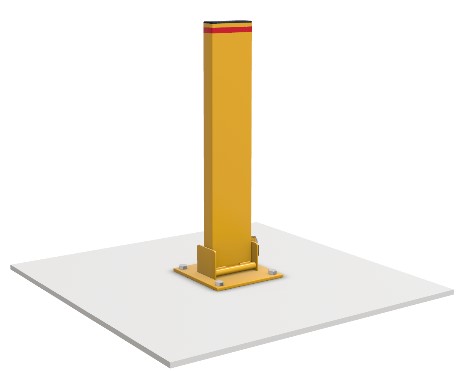 | › Galvanised steel with powder-coated finish to ensure weather resistance and maximum durability › Easy installation (surface-mounted or in-ground kit) › Folds flat when not needed for flexible vehicle-access control › Lockable when upright for reliable security › Low-maintenance solution for long-term applications | › Driveways and service entries needing occasional access › Reserved or controlled parking bays › Car parks needing delivery/ emergency access › Retail/commercial frontages with flexible access needs |
Removable Bollards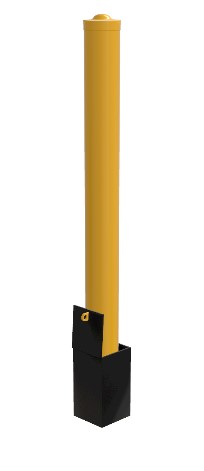 | › Durable galvanised or powder-coated steel construction › Lockable when in place for security › Can be removed to ensure flexible access › Low-maintenance option suitable for temporary applications | › Driveways and private parking protection › Warehouses and loading entries › Car parks with changing access requirements › Areas needing occasional vehicle access (deliveries/ emergency) |
Learn more about Australian Standards for compliant car park bollards.
Do I Need Wheel Stops, Bollards, or Both?
While wheel stops and bollards both serve preventative safety functions, they do so in different ways.
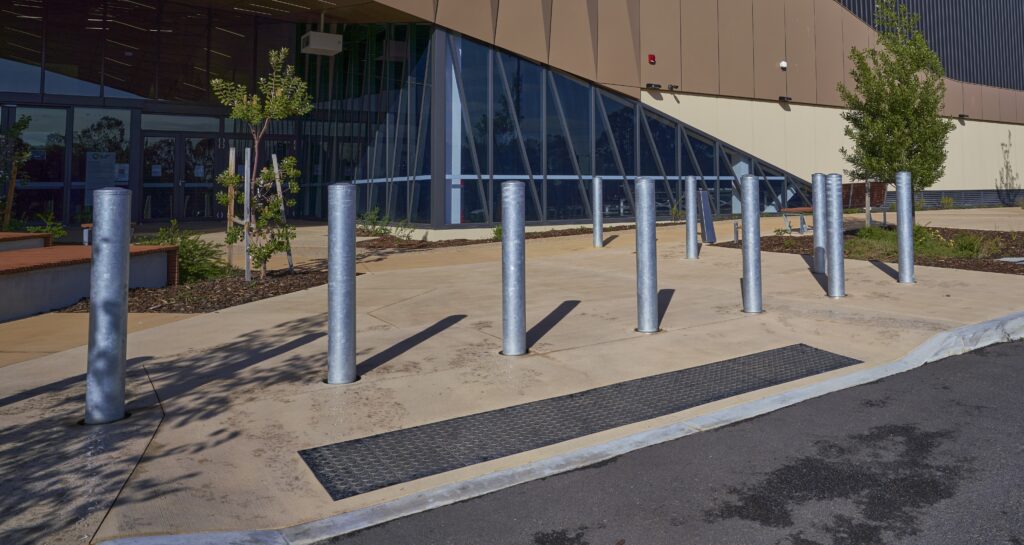
Wheel stops are used to define parking bays and prevent cars from over-travelling into kerbs, walls, or adjacent spaces. On the other hand, bollards are installed to protect entrances, walkways, and pedestrian areas from accidental vehicle impact while helping to guide and restrict traffic flow in public car parks.
In most cases, you’ll need both. As part of a well-considered car park safety strategy, wheel stops and bollards deliver layered protection, cohesive design, and help meet Australian car park design and compliance requirements.
How to Choose the Right Car Park Safety Equipment
Choosing the right car park safety equipment is crucial for managing traffic flow while ensuring safety, accessibility, and compliance.
Start with the basics:
- Assess entrances and exits, traffic flow, vehicle types, and pedestrian routes.
- Identify all required car park safety measures, such as wheel stops, bollards, line markings, and signage.
- Select products that comply with relevant Australian Standards for long-term performance.
Once specified and installed according to guidelines, ongoing maintenance is key. Routine cleaning and inspections help identify loose fixings, faded markings, or damage that could affect performance and safety.
Our experienced team can assess your car park layout and compliance requirements to recommend suitable products and provide a tailored quote for your project.
Small Products, Big Safety Impact
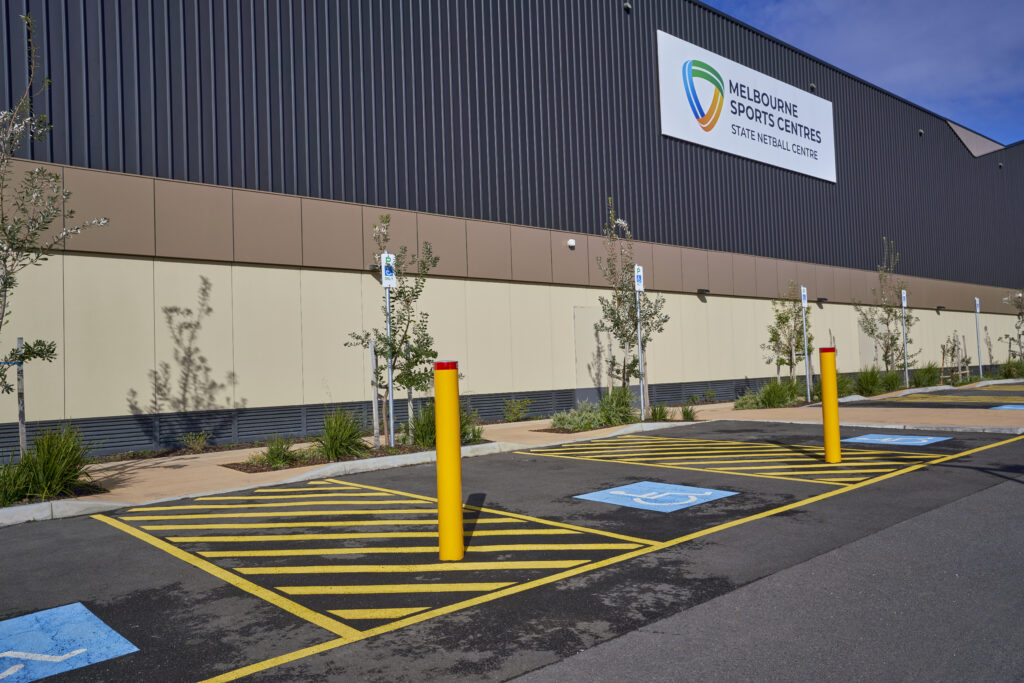
Car park safety starts with proactive planning. Whether you’re working on a new development or a renovation, it’s essential to assess which types of wheel stops and bollards suit your space and meet compliance requirements.
Ready to enhance your car park safety? Our team offers consultation, design, supply, installation and maintenance services. Contact Classic Architectural Group for expert advice and compliant, long-lasting solutions.