
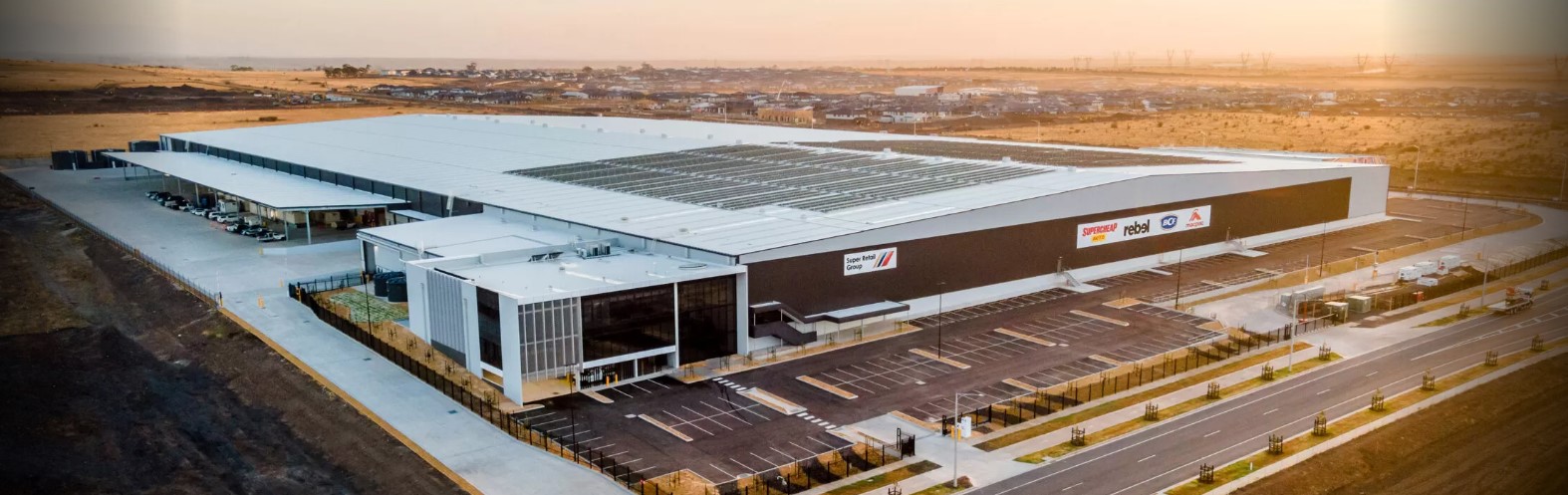
Warehouses and distribution centres are some of the busiest workplaces in Australia: forklifts move constantly, delivery vehicles reverse into loading docks, and workers walk around to pick, pack, and manage stock. The risk of accidents increases in these busy sites. Even with experienced operators and clear procedures, mistakes can happen. In 2024, accidents in warehousing accounted for 29% of all work-related injury fatalities in Australia, costing about $20,700 in compensation for serious claims. That’s why you need passive protection that works even when human attention slips.
Industrial safety bollards play a quiet but critical role in these settings. When used correctly, they protect people and infrastructure and reinforce safer movement throughout the site. Understand why bollards are essential in warehouses and distribution facilities, which places are most vulnerable, and how to choose the right options for your site.
What are Industrial Safety Bollards?
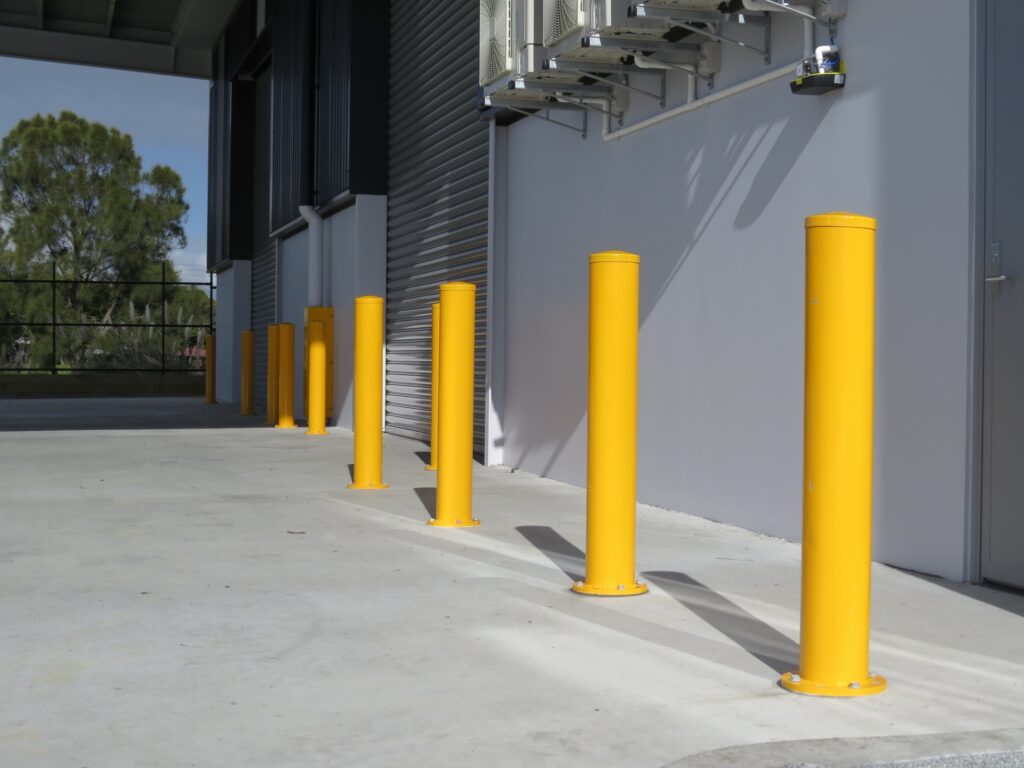
Industrial safety bollards are robust protective posts designed to withstand impacts from heavy vehicles commonly used on industrial sites, such as warehouses and distribution centres. Powder-coated or galvanised bollards are used to resist corrosion and wear. Industrial bollards also feature bright colours, such as yellow or yellow-black stripes. Bright colours improve visibility and awareness, helping staff avoid hazards, while striped patterns signal caution and define safe zones. Sizes, shapes, and bases can be tailored for specific applications. This combination of strength and visual guidance makes safety bollards both protective and proactive in preventing accidents.
How Bollards can Keep your Warehouse and Distribution Centres Safe and Efficient
When used correctly, bollards don’t just absorb accidents. They help prevent them in the first place, which protects your facility, your workers, and your bottom line.
1. Preventing Vehicle Intrusion into Pedestrian Areas
One of the greatest risks in warehouses and logistics is the interaction between people and moving vehicles. Forklifts, pallet trucks, and delivery vehicles often operate in close proximity to staff on foot. Bollards create solid, physical separation between pedestrian zones and vehicle traffic, preventing forklifts or trucks from entering walkways, crossings, or work areas. This clear division reduces the likelihood of serious injury and creates more predictable movement throughout the site.
2. Protecting Buildings, Doors, and Critical Infrastructure
Warehouses contain high-value assets that are vulnerable to impact, including structural columns, racking systems, electrical panels, doors, and loading docks. Bollards absorb or deflect impact before vehicles reach critical infrastructure. By stopping repeated low-level collisions and sudden high-impact strikes, bollards help protect buildings and equipment while reducing the risk of structural damage.
3. Reducing Damage, Downtime, and Injury Risk
The cost of a single collision often extends well beyond visible damage. Impact incidents can stop operations, damage stock, delay dispatch, and trigger safety investigations or compliance issues. By preventing collisions before they happen — or limiting damage in case of an accident — bollards reduce repair costs, operational downtime, and the risk of workplace injuries. Fewer incidents also mean fewer disruptions, helping sites maintain productivity and meet delivery commitments.
Using Bollards To Improve Warehouse and Distribution Centre Safety
There are multiple ways bollards are used in warehouses and distribution centres to reduce collision risk, protect critical assets, and improve overall site safety. Their effectiveness comes from targeted placement.
Using Bollards to Support Traffic Flow and Visual Guidance
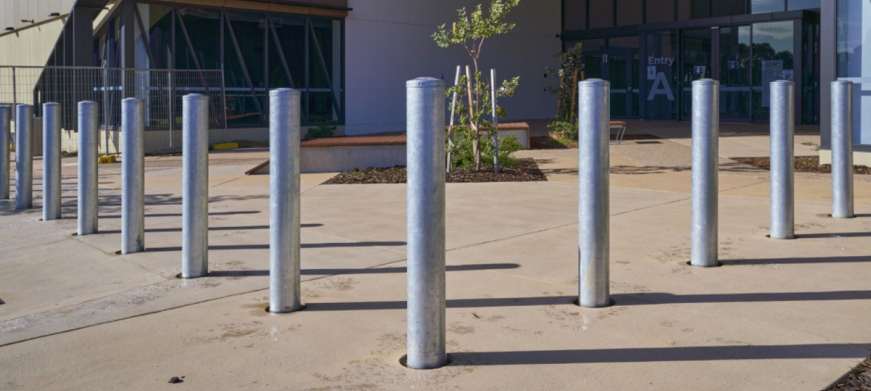
Bollards play a critical role in guiding traffic by providing clear, highly visible physical boundaries. When integrated into a documented internal traffic management plan, bollards reinforce designated travel paths, separation zones, and restricted areas. They work alongside floor markings and safety signage to create consistent, predictable movement patterns, reducing uncertainty and minimising the risk of vehicles encroaching into pedestrian or high-risk zones.
Fixed Bollards for Permanent Guidance
Galvanised steel bollards work well for permanent traffic channelling. They’re highly visible, especially when painted in bright colours or fitted with reflective strips. Consider customising your bollards with powder-coated yellow and bands of reflective tape at different heights to maximise visibility day and night.
Flexible Bollards for High-Traffic Areas
Flexible/spring-back bollards (made from polyurethane or similar materials) are excellent where vehicles might occasionally contact them. They bend on impact and return to position, preventing damage to both vehicles and the bollard itself. These are ideal for parking lots, driveways, and areas where precise navigation is required.
Used correctly, bollards do not replace other safety controls; they strengthen them. By aligning physical barriers with visual guidance systems, warehouses can improve compliance, support safer decision-making, and maintain efficient traffic flow without disrupting daily operations.
Around Equipment and Fixed Machinery
Machinery and fixed equipment can be expensive to repair or replace if they’re damaged by heavy vehicles. Damaged machinery can also disrupt operations if repairs take too long. Placing bollards around heavy equipment and fixed machinery can create clear boundaries for vehicles, preventing costly accidental damage.
Breakaway bollards are often preferred around equipment and fixed machinery, as they absorb impact without damaging the substrate. Cast-in bollards can bend under impact, potentially causing secondary damage to the flooring or machinery.
Around Stock
Racking and shelving systems with stock are vulnerable to forklift impacts, especially if your site has narrow aisles. Placing bollards along shelves and racks can give forklift operators an indication of how much space they have to move, reverse or turn. In case of impact, the bollard absorbs the force, preventing any damage to goods or shelving units.
Breakaway bollards are recommended around stock shelves and racks. The top part breaks off, and there is no secondary damage to the flooring. Cast-in bollards absorb impact well, but depending on the force of impact, they may bend after a collision and hit the stock or shelves, potentially causing damage.
Around Doors, Entrances and Fire Exits
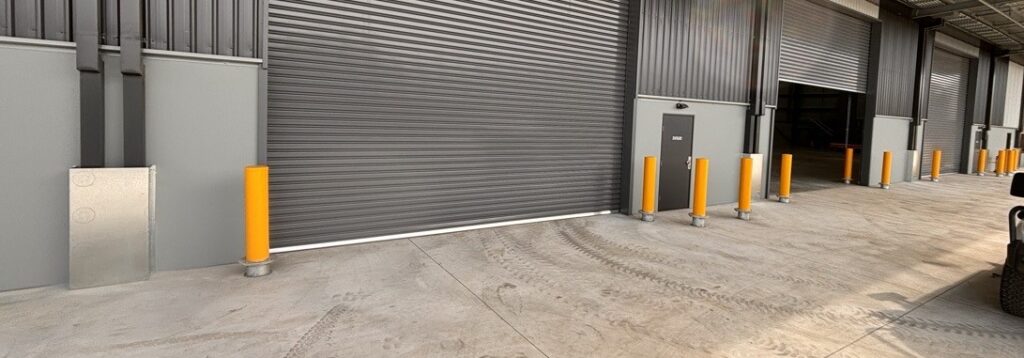
Placing a bollard near doors, entry and exit points, and fire exits helps maintain clear access. Bollards can also prevent accidental vehicle impact near these areas by offering a visual signal. In case of an accident, the bollard absorbs the impact and protects the building and entry/exit points from structural damage.
In-ground bollards offer permanent protection near your entry and exit points. Adding yellow powder coating also increases visibility by clearly defining no-go zones for vehicles.
Pedestrian Walkways and Crossings
One of the most critical functions of bollards is physical separation between people and vehicles. In active warehouse environments, pedestrian zones and walkways can quickly become exposed to risk without clear boundaries.
Bollards help delineate pedestrian areas from vehicle areas. This physical, visible distinction creates predictable movement paths for pedestrians and vehicles, increasing safety for everyone.
Cast-in galvanised bollards or powder-coated bollards are recommended in pedestrian walkways and crossings for permanent protection and high visibility. Locking removable bollards allow you to adjust traffic patterns as needed. They’re useful for areas that need occasional vehicle access or changing traffic flow requirements.
Loading Docks and Dispatch Areas
Loading docks involve reversing vehicles, tight manoeuvring, limited clearance, and heavy-weight vehicles. Accidents are easy to happen in these tight, busy areas. Bollards offer edge and structure protection in case of a collision.
Breakaway bollards can be helpful here. In the event of impact, the top part will detach without damaging the substrate in the loading area.
Corners, Blind Spots and Aisle Ends
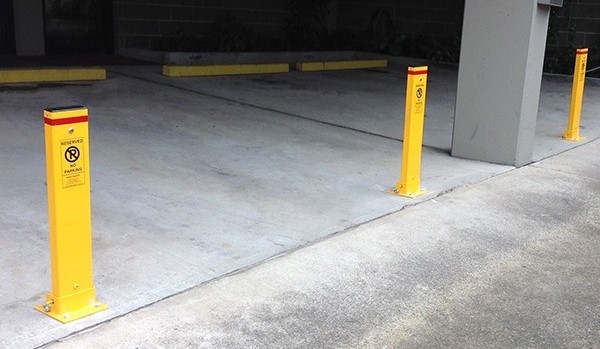
These are common collision points due to limited sight-lines and tight turns. Bollards define clear areas for movement and turning, even around corners. They can be placed around structures like rack ends, columns, or along wall edges. This gives drivers a clear view of the space available for navigation and reduces the risk of collisions.
Both breakaway and cast-in bollards are suitable for these spaces. High-visibility features are critical. Look for bollards in bright colours like yellow, orange, or red, preferably with reflective banding or sleeves applied at multiple heights, such as knee, waist, and eye level. Yellow with black diagonal stripes creates a particularly strong visual contrast. Some models include reflective caps that catch overhead lighting, making them visible from various angles and distances.
For aisle ends specifically, consider using clustered or grouped bollards rather than single units. Installing 2-3 bollards in a line, spaced 3-4 feet apart, creates a much clearer visual barrier that defines the aisle boundary effectively. Using different heights can also increase visibility from various angles and distances.
Factors to Remember When Selecting Bollards
Not all bollards serve the same purpose, so selecting the right bollard depends on how each space is used and what needs to be protected. When selecting bollards, consider the following factors:
Type of bollard and fixing style:
Static (fixed) bollards, such as cast-in bollards, are best suited to permanent installation in high-risk zones. Adequate clearance around these bollards is necessary. In the event of a heavy, high-speed impact, a cast-in bollard absorbs the full force of the collision and may bend. This bending can damage the floor or substrate and may affect nearby structures if the bollard is too close.
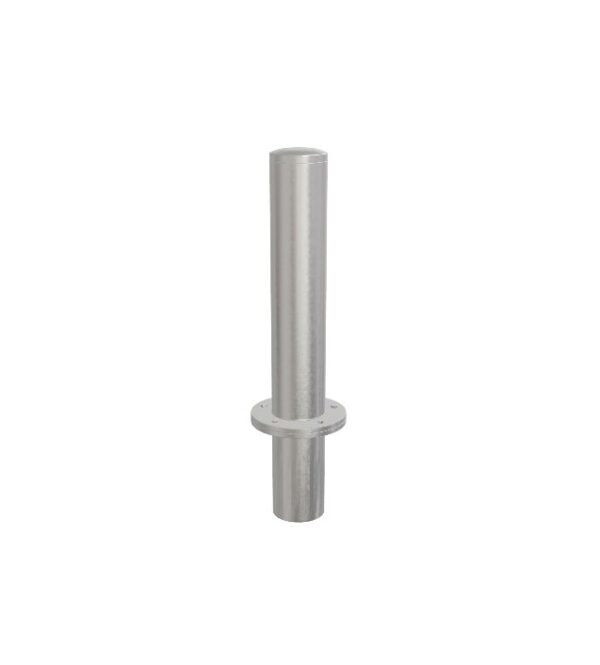
Breakaway bollards are used where impacts are likely. This impact protection is required to avoid damage to the substrate or surrounding assets. Areas with heavy equipment are a common example. If a cast-in bollard is struck in these environments, it can bend, crack the flooring, or even collide with machinery, resulting in costly repairs and operational downtime. On the other hand, breakaway bollards are designed to absorb impact while minimising damage to the floor and nearby assets.
Match protection to operational impact:
Placement should support daily operations rather than hinder movement or access. Understand how high-value equipment and infrastructure are used and how much clearance is required to ensure protection without creating new hazards.
Correct material selection:
Choose the appropriate style and material for each risk area. In most industrial settings, cast-in galvanised steel bollards or breakaway bollards are preferred for their strength, durability, and cost efficiency. These bollards can also be powder-coated yellow to improve visibility in low-light conditions. Stainless steel is rarely specified for warehouses, as aesthetics are typically not a priority in industrial environments.
Visibility requirements:
High-visibility finishes, like the powder-coated yellow, help reduce accidental impacts in busy or poorly lit areas.
Safety-First Sites: Recent Industrial Projects
DHL Casto Way, VIC
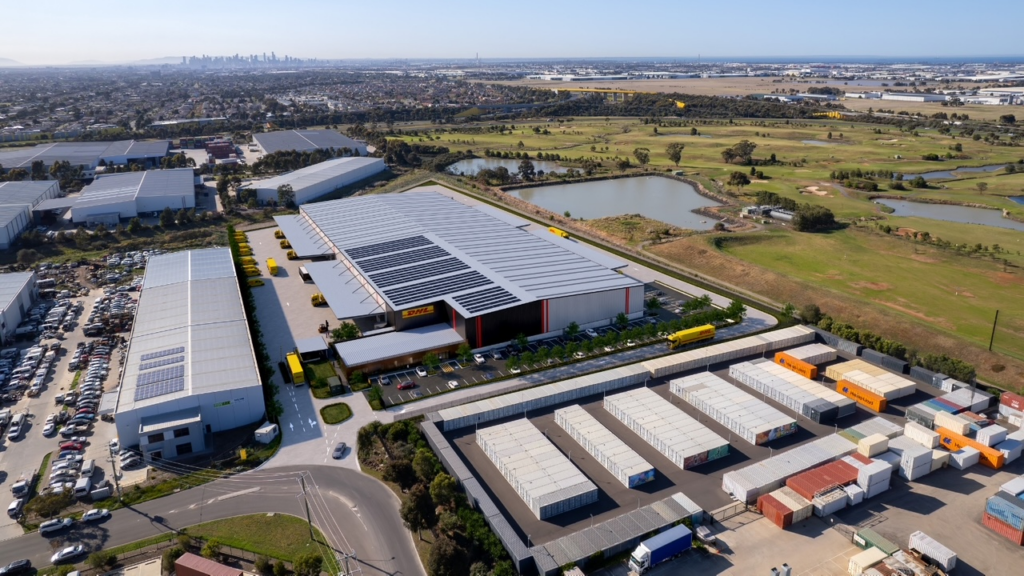
Classic supplied bollards for DHL’s new transport and distribution hub. Our breakaway bollards keep people safe and protect critical infrastructure and the double-sided loading area in a busy industrial environment.
Chester Hill Industrial Precinct, NSW
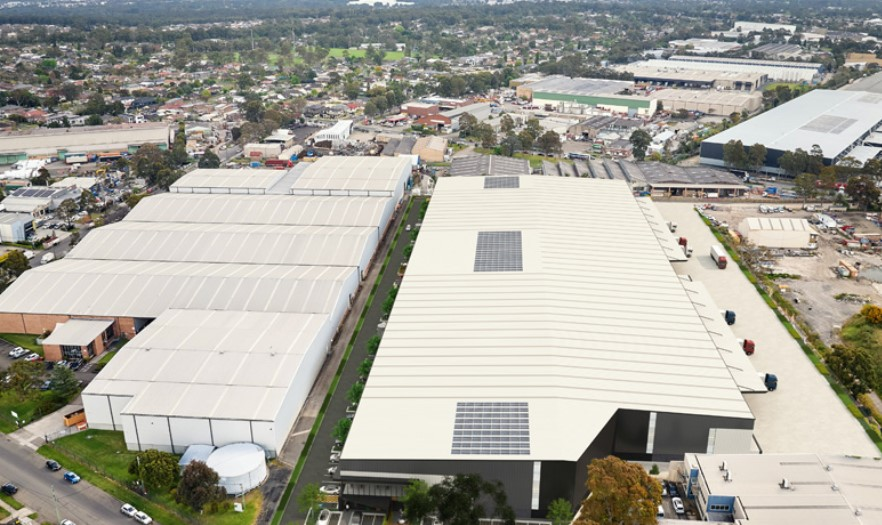
Chester Hill Industrial Precinct is a large area with four contemporary warehouses and adjoining offices. Classic supplied powder-coated and breakaway bollards for the warehouses and the larger facility to maintain safety and compliance in this busy environment.
Bollards as Part of a Safer Warehouse Design
Bollards are most effective when they’re placed intentionally and as part of a site-specific safety strategy. When combined with clear traffic management plans, line markings, and signage, bollards help protect people, infrastructure, and productivity — making them an essential component of modern warehouse and distribution centre design.
If you’re reviewing your site layout, planning safety upgrades, or building a new site from scratch, Classic Architectural Group can help you select the right bollards for your floor plan. Our team offers an end-to-end service — from consultation and design, to manufacturing, supply, installation, and maintenance. For a tailored quote or more information about our products, please contact us today.